Concrete Lifting & Leveling
Lift Sunken Concrete
with Polyurethane Foam
Two-component expanding polyurethane foam injected beneath sunken slabs — precise, fast, and a fraction of the cost of mudjacking or full replacement. Oak Ridge supplies the foam and the equipment.
100 lb/cu ft mudjacking clay
after foam injection
minimal surface disruption
foam & equipment
The Process Explained
What Is Polyurethane Concrete Lifting?
Polyurethane concrete lifting — also called polyjacking, foam lifting, or slab jacking with foam — is a method of raising sunken, settled, or uneven concrete slabs without demolition. A two-component expanding polyurethane foam is injected through small ports drilled in the slab. As the A and B components mix and react, the foam expands under controlled pressure, filling voids and raising the slab back to its original grade.
The reaction is fast and highly controllable. Experienced operators can achieve lift precision measured in fractions of an inch by regulating injection volume and monitoring grade in real time. Once the foam cures — typically within minutes — it forms a rigid, closed-cell structure that is waterproof, dimensionally stable, and highly resistant to soil wash-out.
Compared to traditional mudjacking (pumping a cement-sand-water slurry beneath slabs), polyurethane foam offers dramatic advantages in weight, cure time, and long-term performance. Compared to full slab replacement, poly lifting can cost 50–75% less and eliminates weeks of disruption.
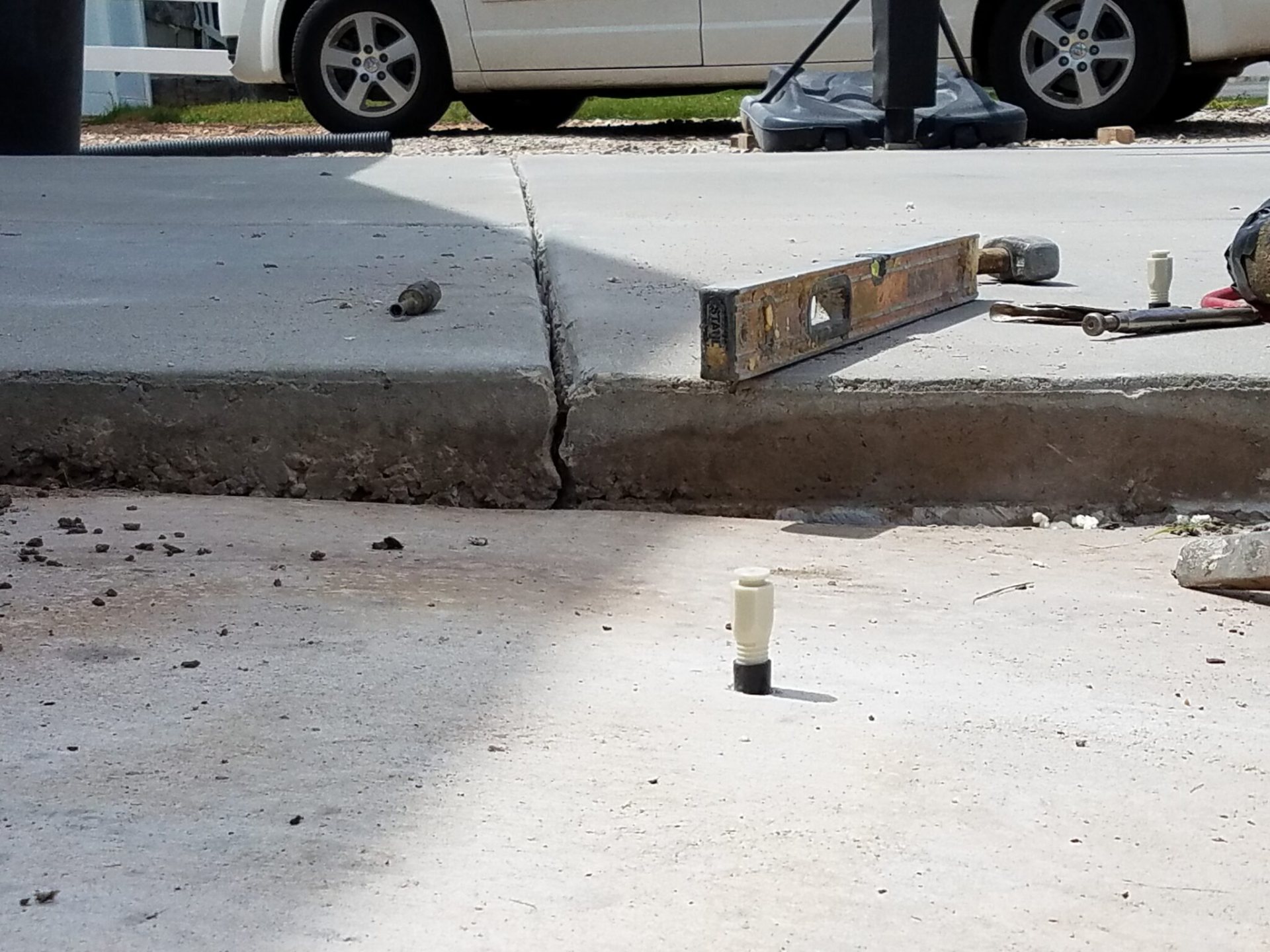
Technicians drill ¾" holes through the slab at strategic locations above voids or settled areas. Ports are spaced to ensure foam coverage across the full lift zone.
An IPM or PMC proportioner pumps equal volumes of the A (isocyanate) and B (polyol blend) components at high pressure through heated hoses to a mix gun inserted at the port. The components react on contact.
The expanding foam fills voids, compacts loose subbase material, and generates upward pressure that raises the slab. Operators monitor grade and stop injection when the target elevation is reached.
Injection ports are patched with non-shrink grout or caulk. The slab is ready for foot and vehicle traffic within 15–30 minutes. No waiting for curing concrete, no barricades for days.
Real Project Results
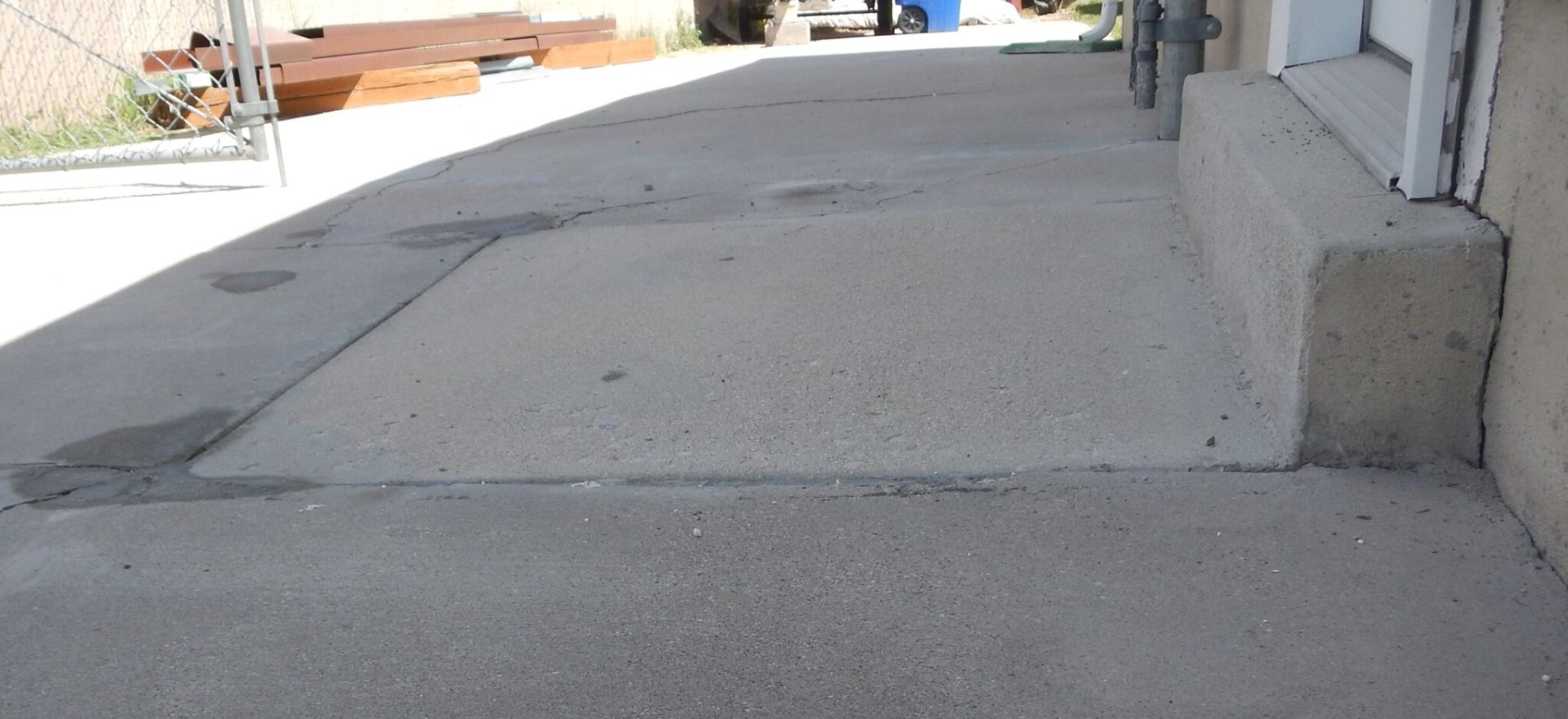
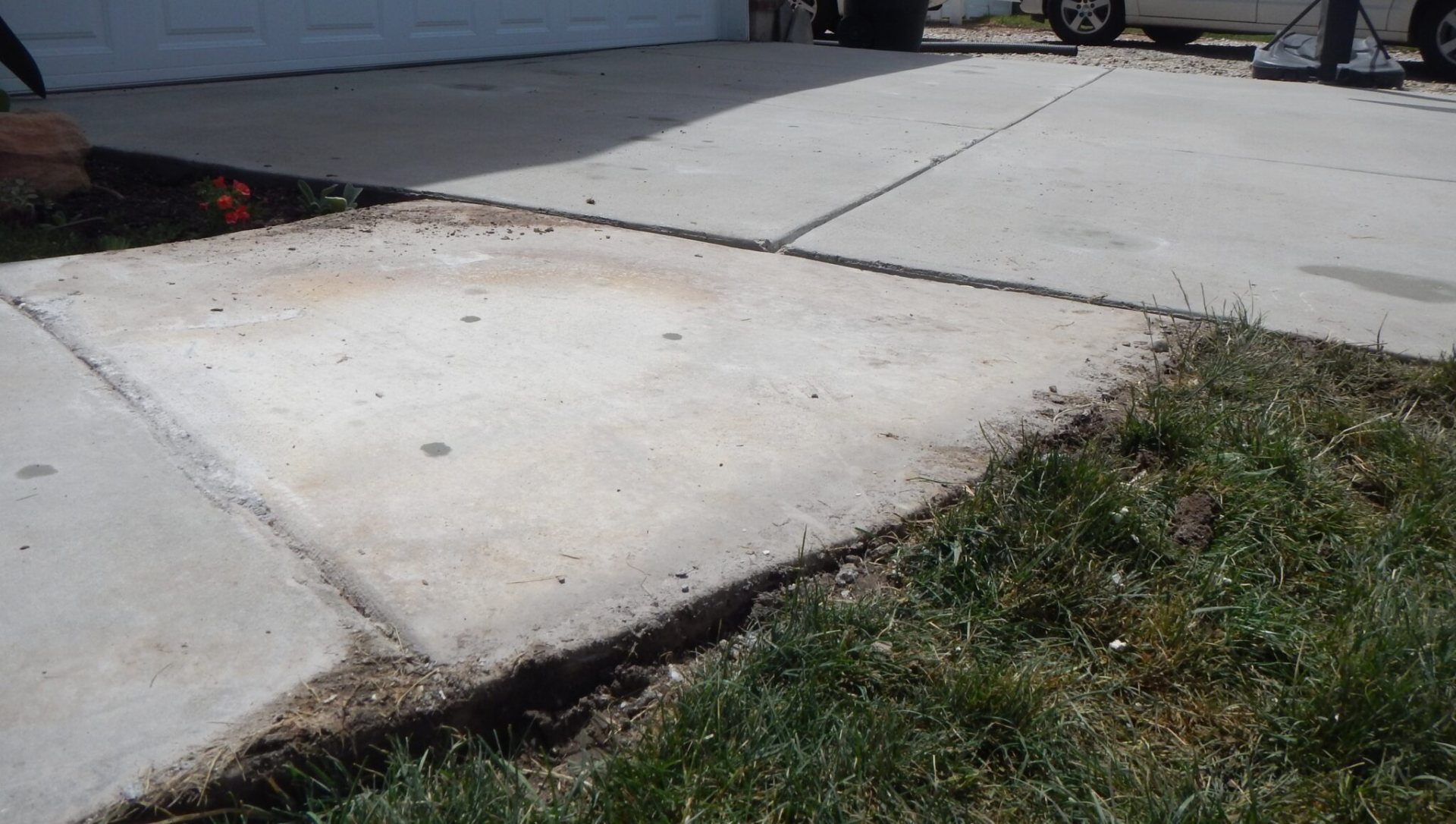
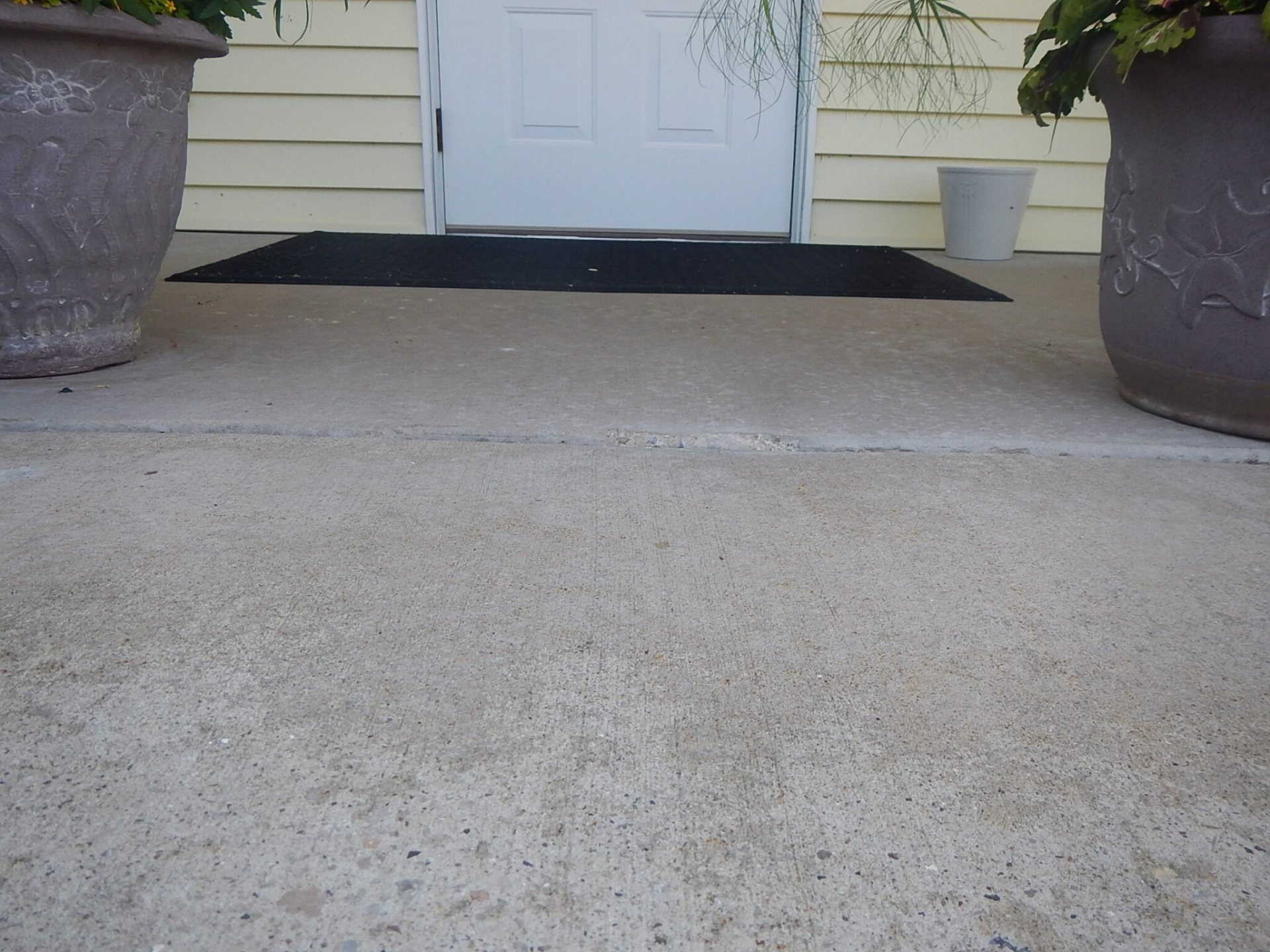
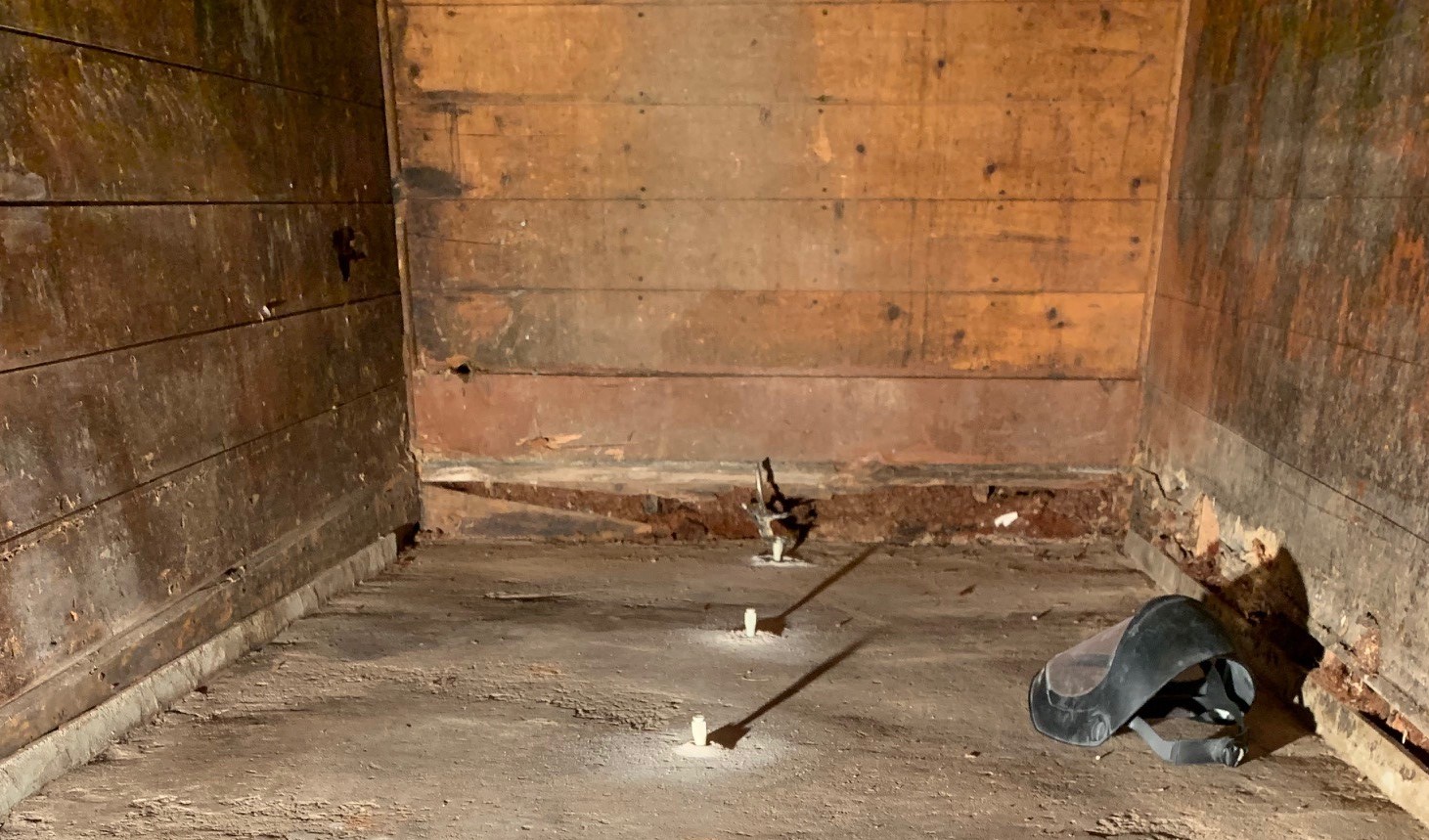
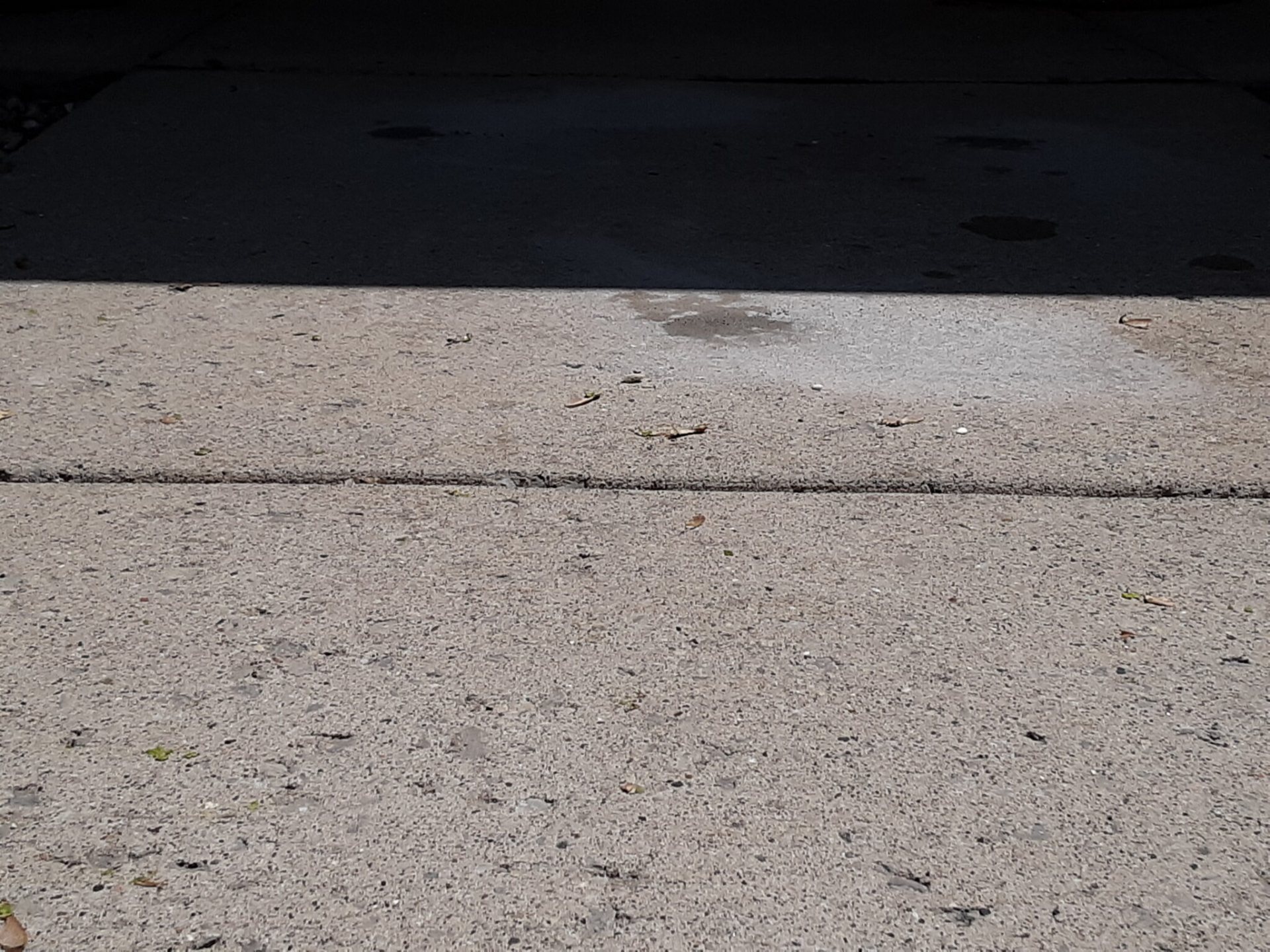
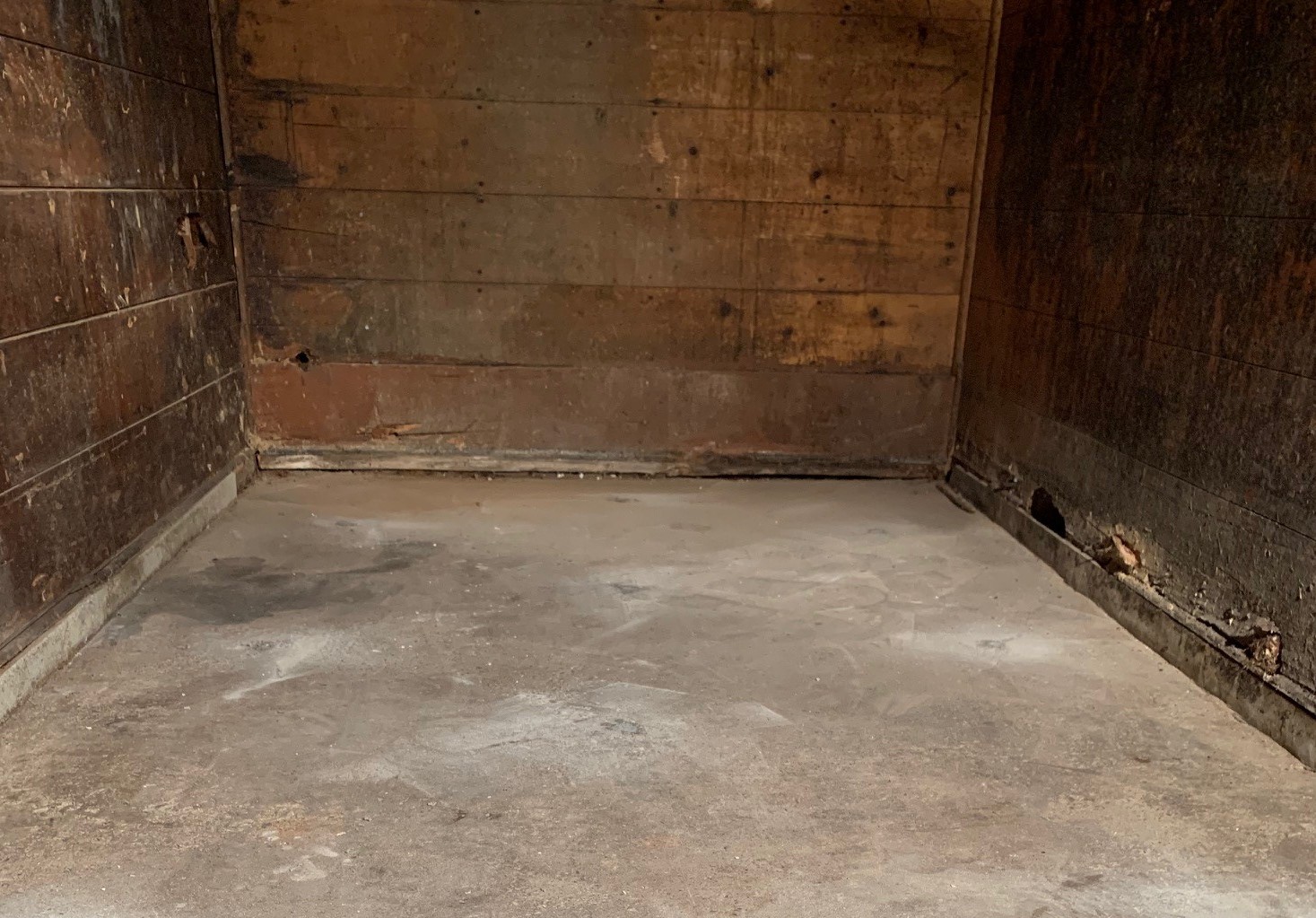
Before & After: Polyurethane Concrete Lifting
Sunken driveways, settled warehouse slabs, and tripping-hazard sidewalks lifted back to grade — without tearing out and replacing the concrete.
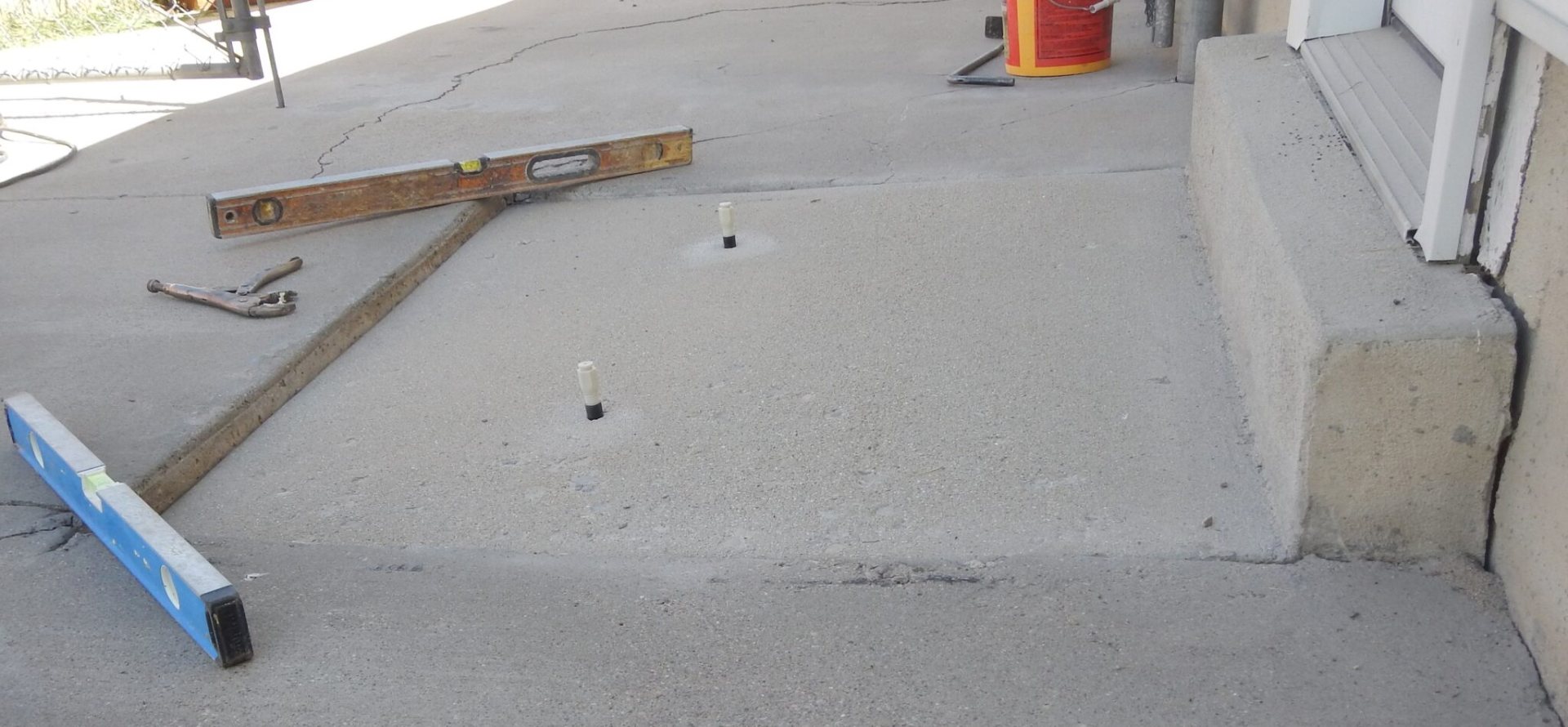
Finished Result
Where Poly Lifting Works
Applications for Polyurethane Slab Lifting
Any concrete surface that has settled, sunken, or become uneven is a candidate for polyurethane foam lifting — residential, commercial, municipal, or industrial.
Garage aprons, driveway panels, and approach slabs that have dropped due to soil erosion, frost heave, or compaction are common targets. Work is completed in hours — not days — with no driveway replacement needed.
Uneven sidewalk panels create trip hazards and ADA compliance issues. Foam lifting restores flush joints quickly, allowing municipalities and property owners to address liability concerns without full sidewalk replacement.
Garage floor slabs that have dropped at the perimeter or cracked in the center are often caused by sub-base voids. Foam fills those voids and lifts the slab without removing vehicles, equipment, or floor coatings.
Forklift traffic causes slab fatigue and soil consolidation. Panel differential of even ½" can damage forklifts and product. Foam lifting levels panels overnight — operations resume the next shift without extended downtime.
Pool deck slabs settle toward the pool structure as backfill compacts over time. Foam lifting raises settled panels without disturbing existing tile, coping, or waterline finishes. The waterproof foam also helps reduce future water infiltration under the slab.
DOTs use polyurethane slab stabilization and lifting on jointed concrete pavement to correct panel faulting — the differential displacement at transverse joints that causes ride roughness and accelerates pavement fatigue. Lane closures are measured in hours.
The "bump at the bridge" — settlement of approach slabs relative to the bridge deck — is one of the most common highway maintenance problems. Polyurethane foam injection stabilizes the sub-base and lifts approach slabs efficiently, with no lane closure stretching over days.
Concrete parking lot panels and loading dock aprons subjected to repeated heavy truck loading can settle unevenly. Foam lifting addresses settled dock aprons and panels without tearing up the entire lot — sections can be done overnight to keep the facility operational.
Method Comparison
Polyurethane Foam vs. Mudjacking
Both methods aim to lift sunken concrete without replacing it — but the materials and results are very different.
| Factor |
Polyurethane Foam
|
Mudjacking (Cement Slurry) |
|---|---|---|
| Material Weight |
~2 lb/cu ft
Near-weightless — no added load on sub-base
|
~100–120 lb/cu ft
Adds significant weight; can accelerate future settlement
|
| Cure / Return to Service |
15–30 minutes
Same-day traffic restored
|
24–72+ hours
Extended closures required
|
| Hole Size |
¾″ diameter
Minimal surface disruption
|
1½″–2″ diameter
Larger, more visible patches
|
| Water Resistance |
Waterproof
Closed-cell foam does not absorb water; resists wash-out
|
Water-susceptible
Slurry can erode and wash out over time
|
| Lift Precision |
Fraction-of-inch control
Operator adjusts in real time by volume and location
|
Less precise
Fluid slurry harder to control; over-lift risk
|
| Long-Term Stability |
Dimensionally stable
Rigid closed-cell foam does not shrink, settle, or biodegrade
|
Variable
Organic material in slurry can decompose over time
|
| Equipment Needed |
Portable proportioner
Compact unit fits in a van or small trailer
|
Large mixing trucks
Heavier, louder, more intrusive on residential jobs
|
Foam vs. replacement: polyurethane concrete lifting typically costs 50–75% less than full slab removal and replacement, with a fraction of the disruption time.
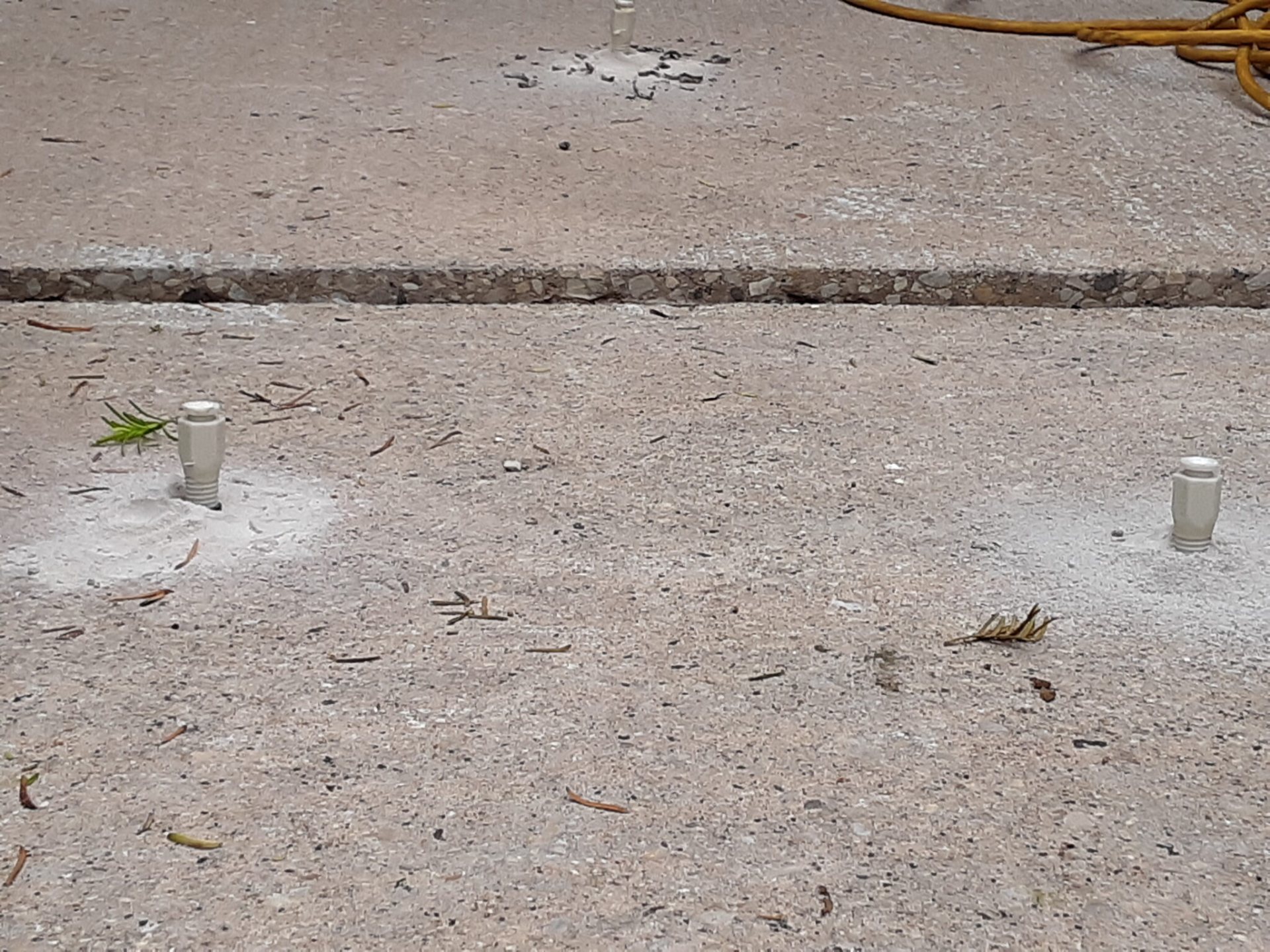
Oak Ridge Concrete Lifting Foam
2.8 lb High-Density Concrete Lifting & Leveling Foam
Oak Ridge Foam & Coating Systems manufactures and supplies a purpose-formulated 2.8 lb/cu ft high-density two-component polyurethane foam for concrete lifting and slab stabilization applications. This is not a general-purpose spray foam — it is engineered specifically for the controlled, high-pressure injection environment required for poly lifting work.
Equipment for Poly Lifting
The Right Proportioner for Concrete Lifting Work
Polyurethane concrete lifting requires a heated, high-pressure plural-component proportioner — the same basic technology used for spray foam and polyurea, adapted for controlled injection through small-diameter ports.
IPM Proportioning Machines
Integrated Proportioning Machines for controlled-volume lifting
IPM proportioners are widely used in the concrete lifting industry because of their precise volume control and compact form factor. These machines meter equal volumes of A and B components at precisely regulated pressure and temperature, then deliver the mixed foam through heated hoses to a dispensing gun at the injection port. Oak Ridge is an authorized supplier of IPM equipment — including proportioners, heated hose sets, and accessories designed for poly lifting applications.
- Compact — fits in a service van or small trailer
- Variable output for precision injection control
- Heated A and B lines to maintain chemistry temperature
- Suitable for both residential and commercial-scale jobs
PMC Proportioning Machines
High-output machines for large commercial projects
PMC (Polyurethane Machinery Corporation) proportioners are the industry benchmark for high-pressure, heated plural-component dispensing. Used extensively in spray foam roofing and polyurea coating applications, PMC machines are equally well-suited for concrete lifting when paired with the right mix guns and injection port accessories. Their proven reliability, wide operating range, and robust heated hose systems make them a strong choice for contractors who want a single machine capable of poly lifting, spray foam, and coatings work. Oak Ridge supplies PMC proportioners and can help configure a machine package for your poly lifting operation.
- High-pressure output for consistent foam injection
- Multi-purpose — also handles spray foam and polyurea
- Proven reliability across thousands of field hours
- Full parts and service support through Oak Ridge
Starting a Poly Lifting Business? Oak Ridge Can Set You Up.
Whether you're adding concrete lifting to an existing spray foam or foundation repair operation, or starting a dedicated poly lifting company, Oak Ridge can supply the foam chemistry, proportioner, hoses, guns, and injection port accessories as a complete package — along with the technical support to get your first jobs done right.
Why Oak Ridge
Supplying Concrete Lifting Foam Since 1984
Oak Ridge Foam & Coating Systems, Inc. has been manufacturing and distributing two-component polyurethane foam systems from Green Lake, Wisconsin since 1984. We're not a distributor reselling someone else's chemistry — we're a manufacturer who controls the formulation, the production process, and the product quality that goes out our door.
For concrete lifting contractors, that means you get direct access to the foam chemist, not a customer service representative reading from a spec sheet. When your foam isn't behaving as expected on a cold morning job or a humid summer slab, you need real answers — and Oak Ridge can provide them.
Every drum of concrete lifting foam from Oak Ridge is manufactured to tight tolerances. You're not getting rework or off-spec material — just the same chemistry your crews can rely on job after job.
Call us at 800-625-9577 with a field question and you'll reach a real person who understands two-component chemistry, machine settings, and job conditions — not a voicemail system.
We ship drums and totes of concrete lifting foam across the country. Whether you need a single set to try or a pallet order to stock a busy season, Oak Ridge can accommodate your volume.
Concrete Lifting Foam — Technical FAQ
What density foam is used for concrete lifting?
What pressure and temperature does poly lifting foam require?
How much foam does it take to lift a 10×10 driveway panel by 1 inch?
Does polyurethane lifting foam cause slabs to crack?
Is polyurethane concrete foam the same as spray foam insulation?
Will polyurethane foam hold up under freezing temperatures after installation?
Related Services & Products
Explore the Full Oak Ridge Product Line
Closed-cell, open-cell, and specialty foam systems for roofing, walls, and commercial insulation applications.
Fast-set 100% solids polyurea for truck bed liners, industrial floors, waterproofing, and protective coatings.
IPM, PMC, and other proportioning machines for spray foam, polyurea, and concrete lifting — plus hoses, guns, and accessories.
Contractor insights & guides
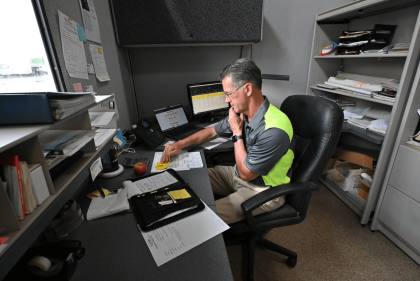
Marketing Your Spray Foam Business: 25 Tactics That Get Leads
Growing a spray foam business in a competitive market takes more than skill — you need leads. These 25 marketing tips cover Google Business Profile, local SEO, referral programs, before/after photos, and strategies contractors at every stage can put to work immediately.
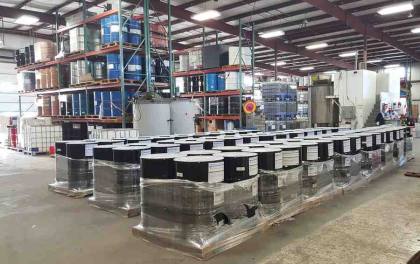
How To Store Your Spray Foam And Coating System
Proper storage of spray foam and coating materials extends their shelf life, protects your investment, and prevents costly off-ratio application. This guide covers temperature ranges, drum orientation, nitrogen blankets, and how to manage seasonal storage for contractors in cold climates.
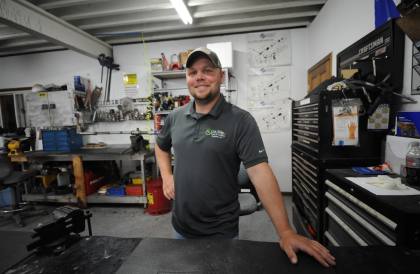
How to Rebuild a Graco Fusion AP Spray Gun
The Graco Fusion AP is the industry-standard spray gun for polyurea and spray foam applications — but it requires regular maintenance and periodic rebuilds to perform at spec. This step-by-step guide walks through the full rebuild process with part numbers.
Get Started with Oak Ridge
Ready to add concrete lifting
to your service line?
Oak Ridge Foam & Coating Systems supplies 2.8 lb high-density concrete lifting foam, IPM and PMC proportioning equipment, and the field expertise to help you start — or scale — a polyurethane concrete lifting operation. We've been in the foam business since 1984 and we'll help you get the right system for your jobs.