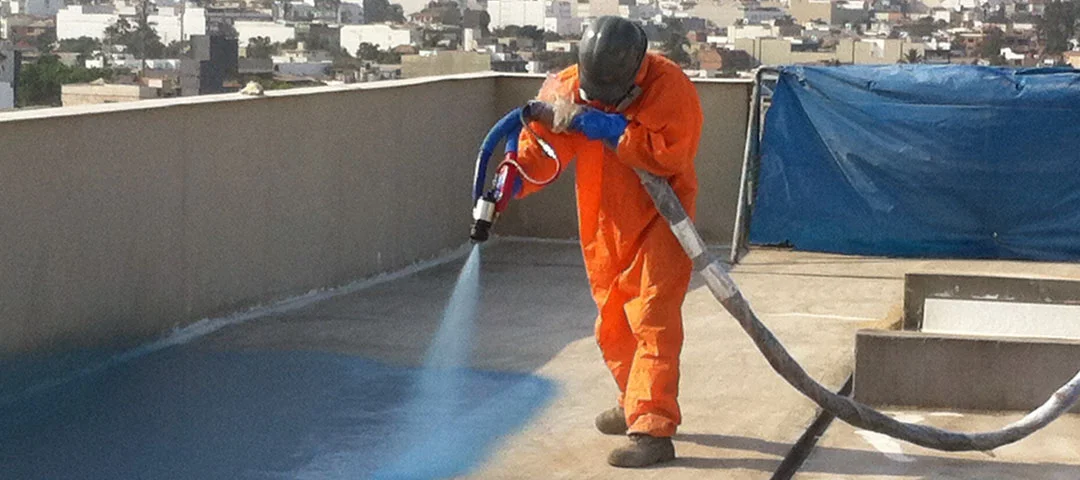
Polyurea & Spray Foam Waterproofing
Polyurea Waterproofing Solutions
— Fast, Durable, Seamless
From commercial rooftops and bridge decks to basement walls and secondary containment, Oak Ridge Foam & Coating Systems supplies proven polyurea waterproofing materials and the equipment to apply them — since 1984.
What Is Polyurea Waterproofing?
The Gold Standard in Seamless Waterproof Membranes
Polyurea is a two-component elastomeric coating formed when an isocyanate reacts with a polyamine blend. Spray-applied at high pressure and temperature, it cures in seconds to form a continuous, seamless, flexible membrane that bonds tenaciously to virtually any substrate — concrete, metal, foam, wood, and more.
Unlike traditional waterproofing membranes that rely on laps, seams, and adhesive joints, a spray-applied polyurea waterproofing system is truly monolithic. Every penetration, inside corner, transition, and drain is coated in-place with no discontinuities — eliminating the joints and seams where conventional waterproofing systems almost always fail.
Oak Ridge Foam & Coating Systems (ORFC) has supplied professional spray polyurea and spray foam roofing waterproofing systems to contractors across the country since 1984. We formulate our own coating systems, supply Graco and PMC proportioning equipment, and back every system with hands-on technical support.
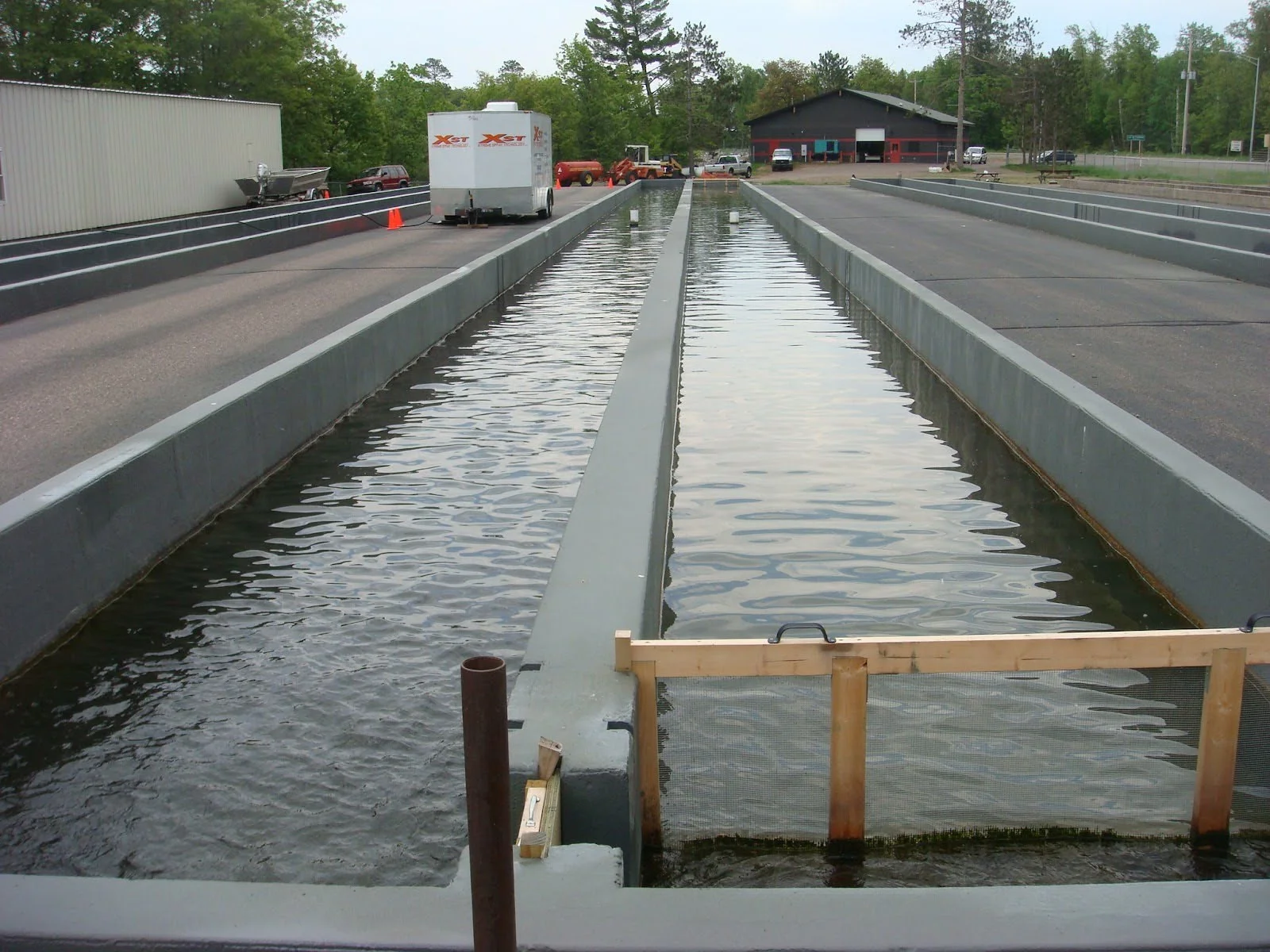
Waterproofing Applications
Proven Across Every Waterproofing Challenge
Spray polyurea and SPF waterproofing systems are used across a wide range of industries and substrates. ORFC supplies materials, equipment, and technical guidance for all of them.
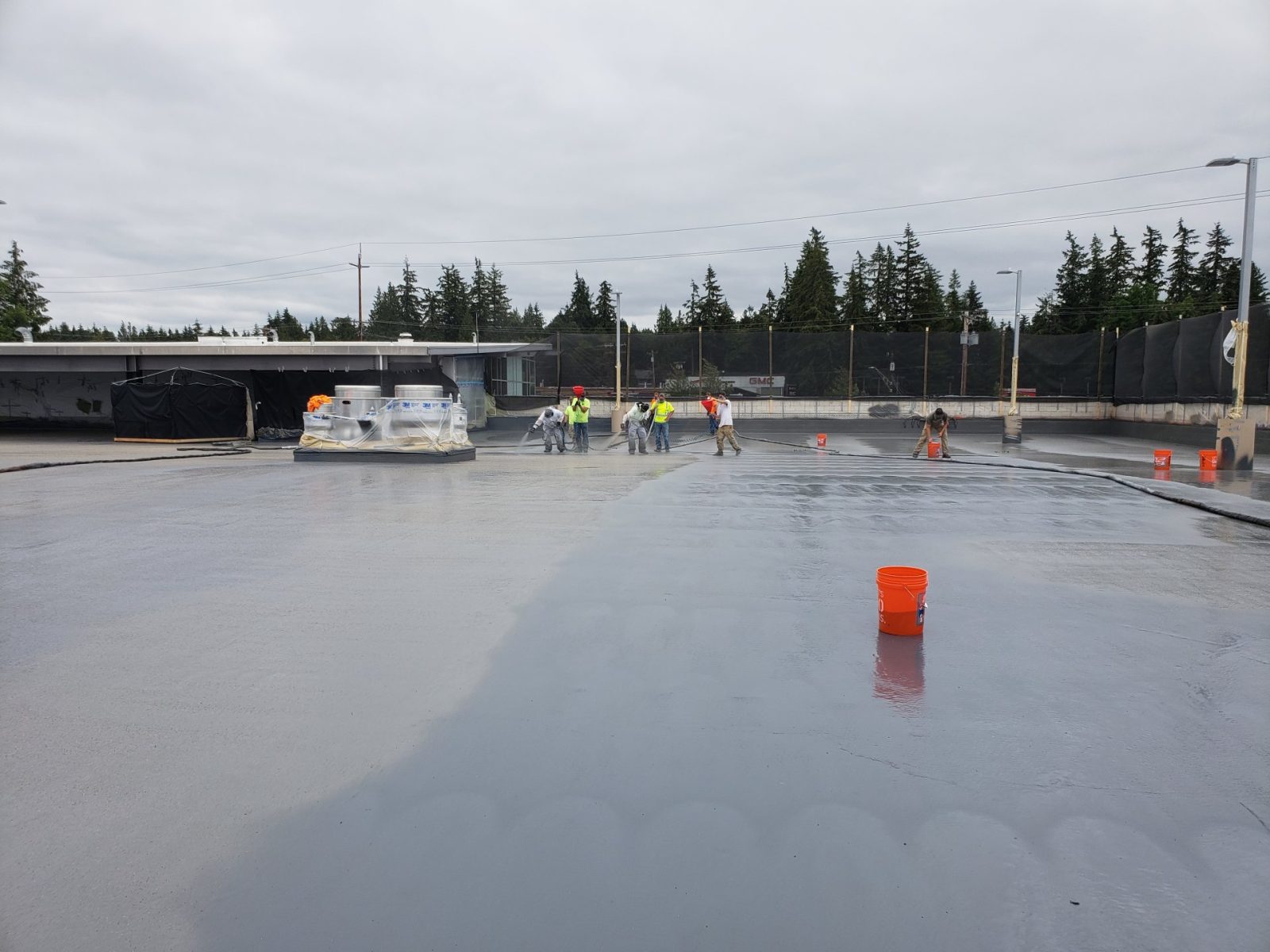
Roofing Waterproofing
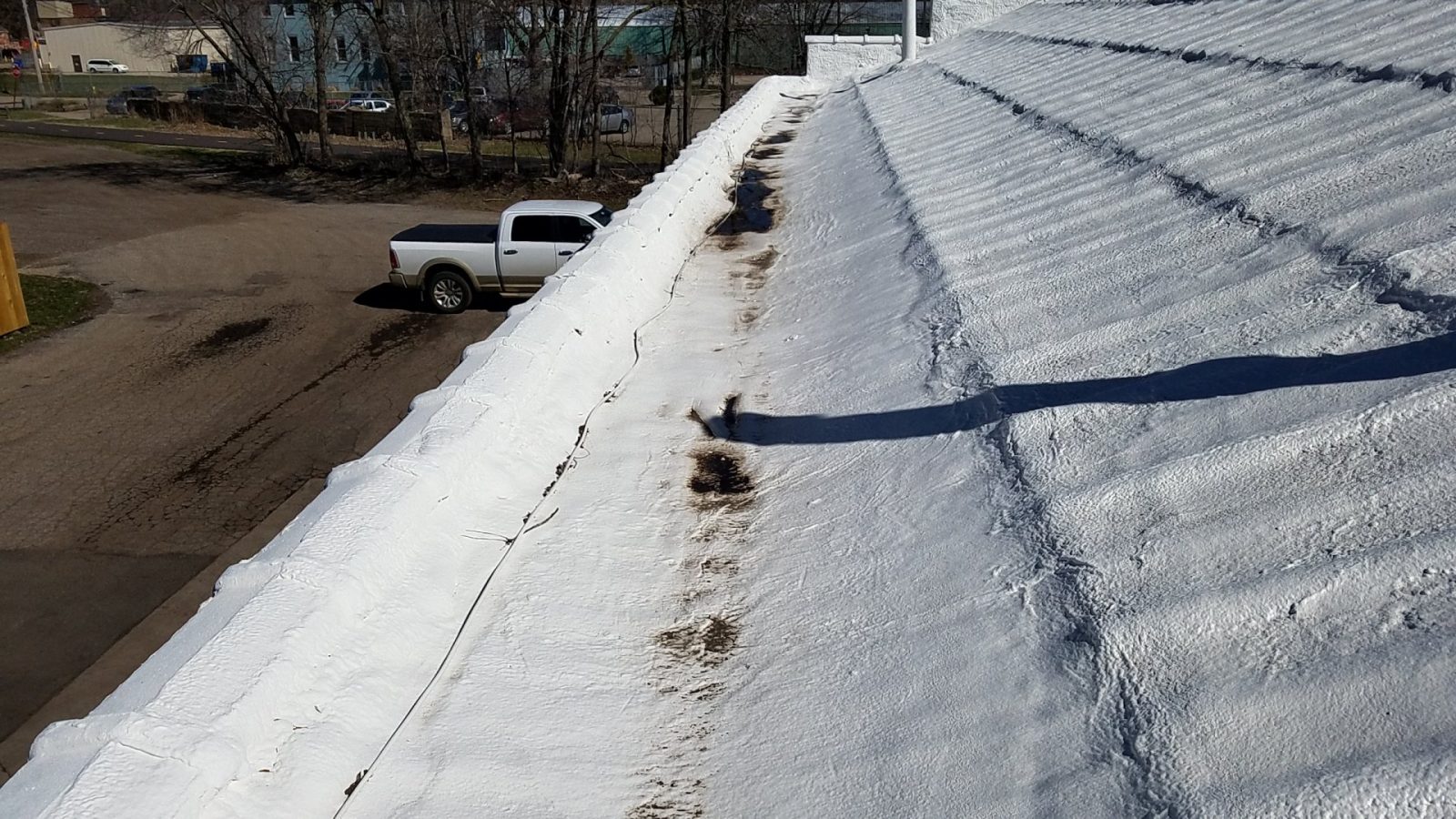
Spray polyurethane foam (SPF) applied directly to the roof deck provides both insulation (R-6.5/inch) and a structurally monolithic substrate. A polyurea or elastomeric topcoat seals the foam against UV and moisture, creating a seamless, self-flashing roofing membrane with 15–20+ year service life when properly maintained. No seams, no laps, no fastener pullouts.
- • Flat and low-slope commercial roofs
- • Retrofit over existing roofing substrates
- • Self-flashing around HVAC penetrations and curbs
- • White reflective topcoats available for cool-roof credits
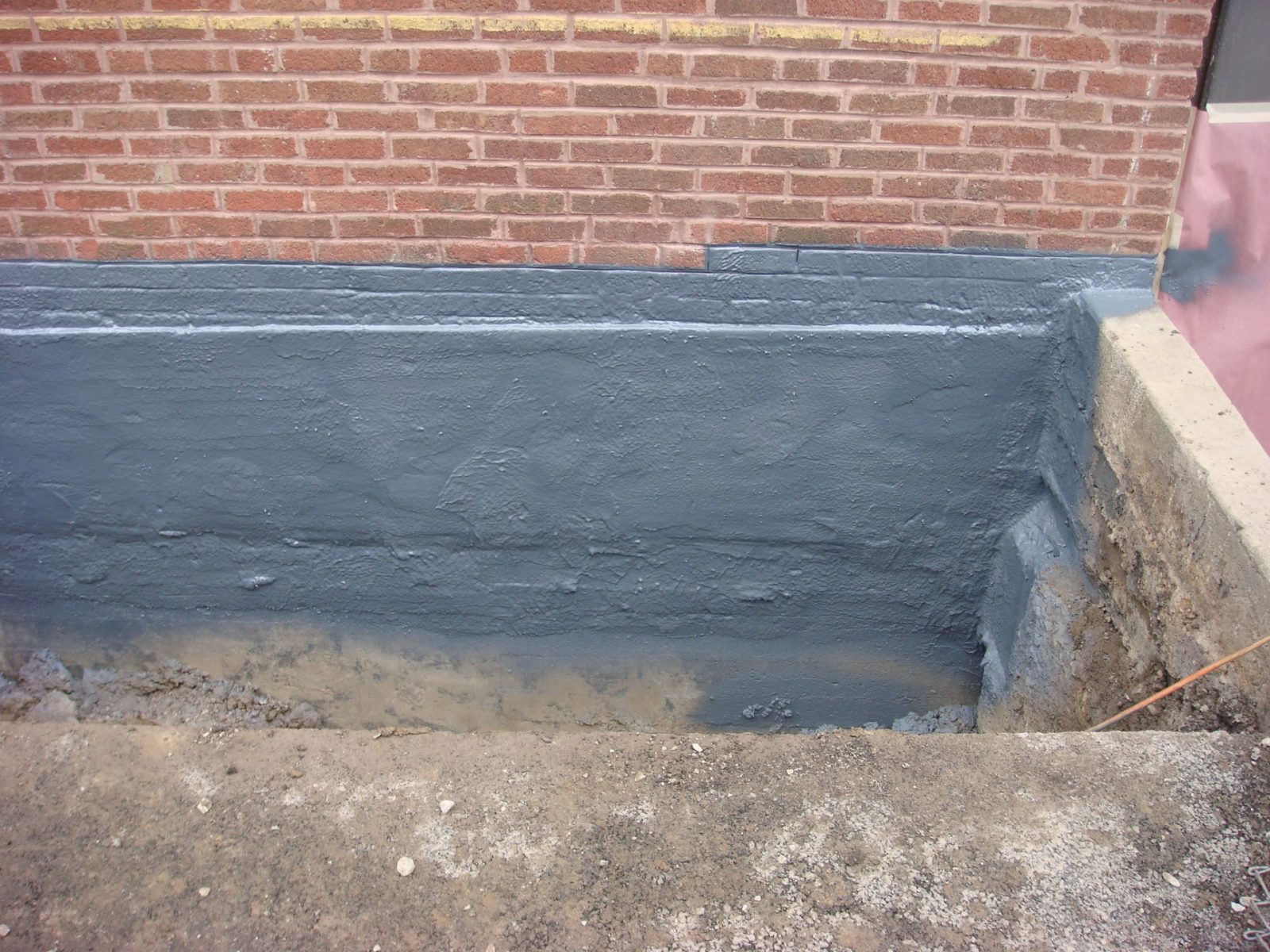
Foundation & Basement Walls
Poured concrete and block foundation walls are prone to water infiltration through pores, cracks, and cold joints. BadgerBlack polyurea waterproofing bonds directly to the concrete, bridging hairline cracks and substrate movement with 300%+ elongation. The result is a continuous, vapor-impermeable barrier that dramatically outperforms sheet membrane systems and stays bonded even as the structure settles.
- • Below-grade concrete and CMU walls
- • Elevator pits and utility tunnels
- • Crawl space wall encapsulation
- • Horizontal slab waterproofing
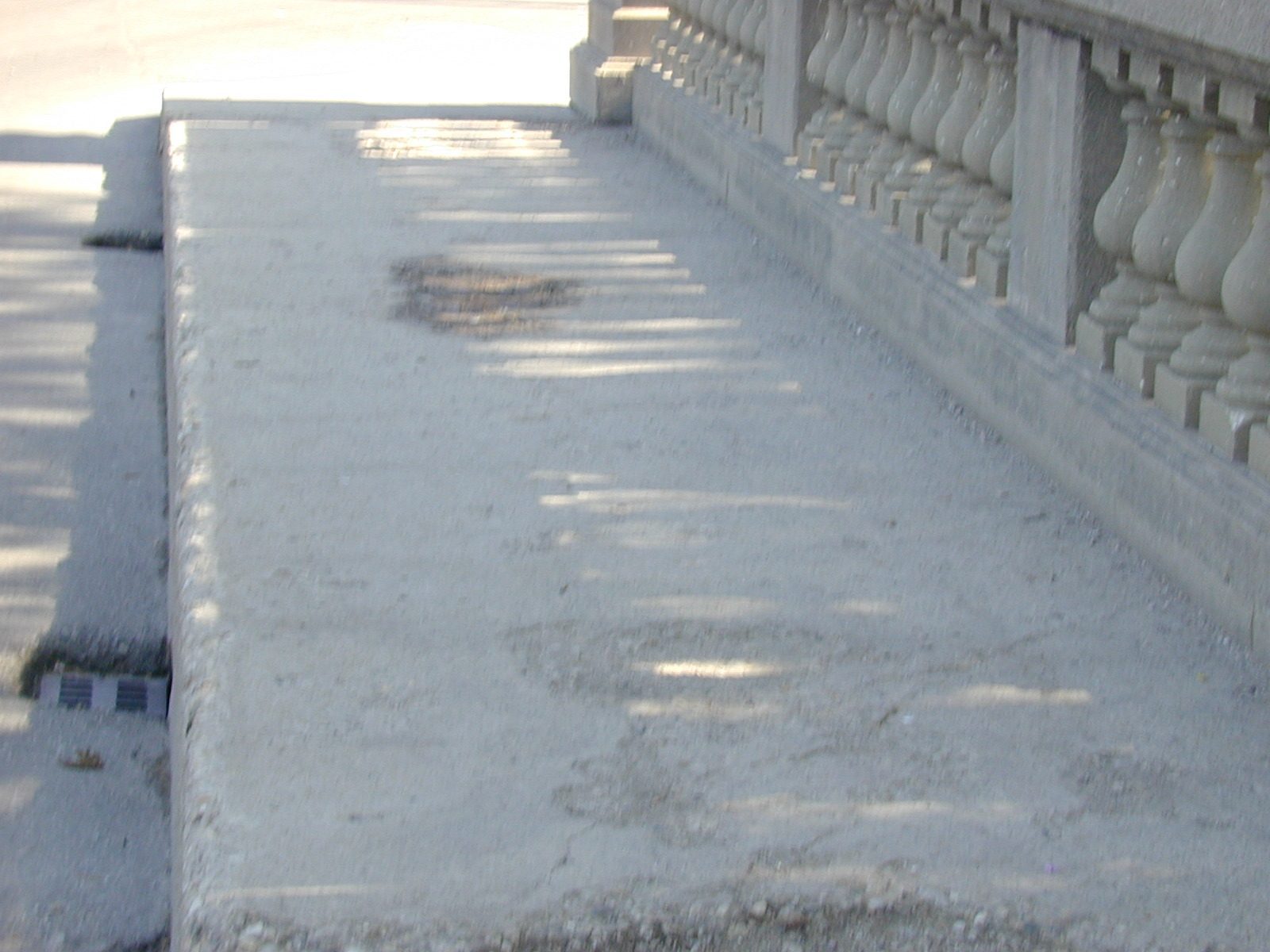
Bridge & Infrastructure
Bridges and civil structures face constant exposure to freeze-thaw cycles, chloride salt penetration, impact, and abrasion. Polyurea waterproofing coatings provide a sacrificial protective layer that resists all of these failure mechanisms simultaneously. Fast cure time allows crews to complete protection applications during tight traffic control windows — returning structures to service the same day.
- • Bridge deck waterproofing membranes
- • Abutments, piers, and wingwalls
- • Culverts and drainage structures
- • Steel structure corrosion protection
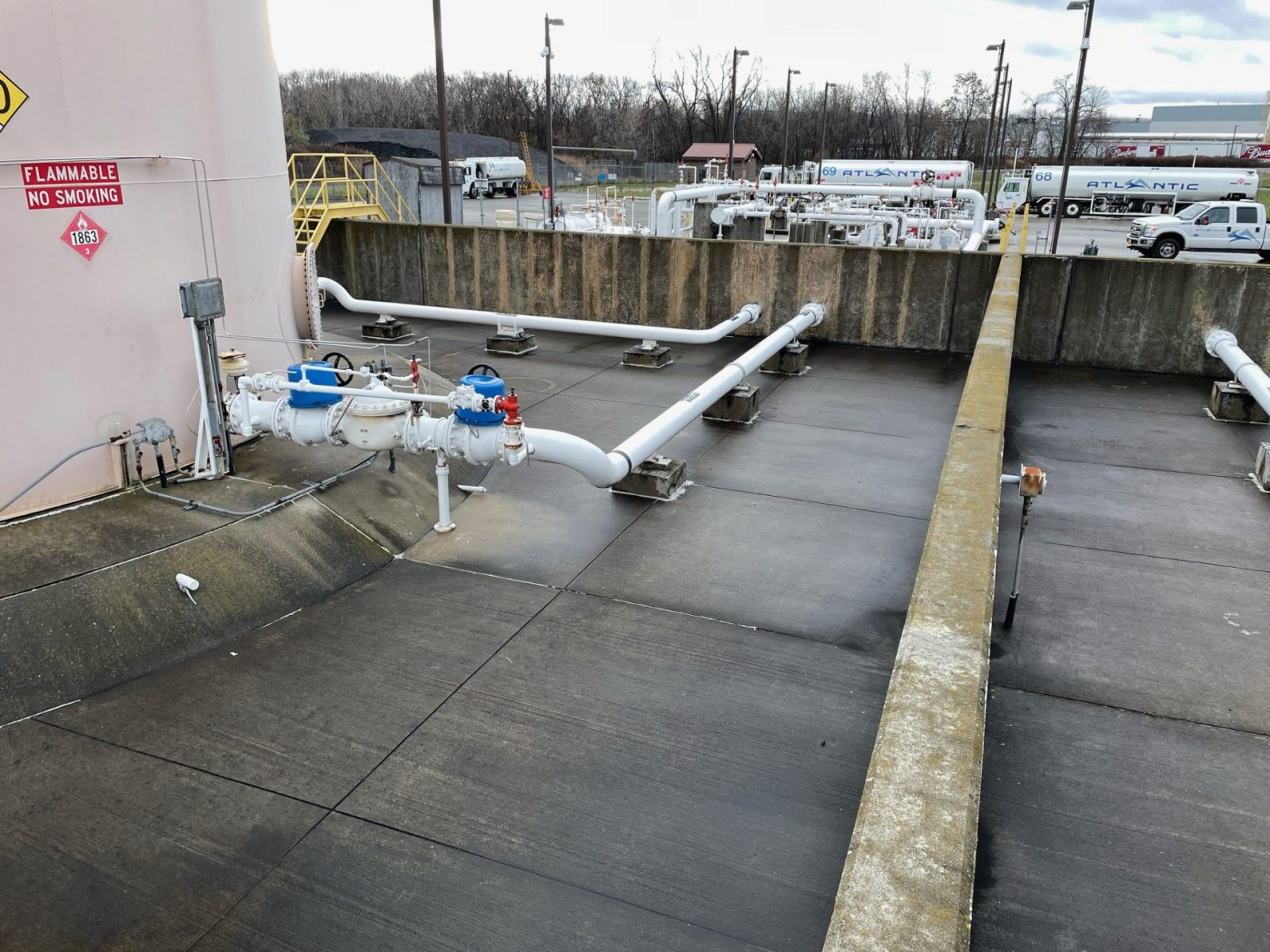
Secondary Containment
Regulatory compliance for fuel, chemical, and agricultural storage requires secondary containment capable of holding 110% of the largest tank. Spray polyurea lines tanks, berms, and sumps in a fraction of the time of poured concrete liners, with superior elongation and chemical resistance. Passes ASTM immersion testing for fuels, fertilizers, acids, and alkalis.
- • Fuel storage berm linings
- • Chemical storage sumps
- • Agricultural chemical tanks
- • Manure pits and lagoon berms
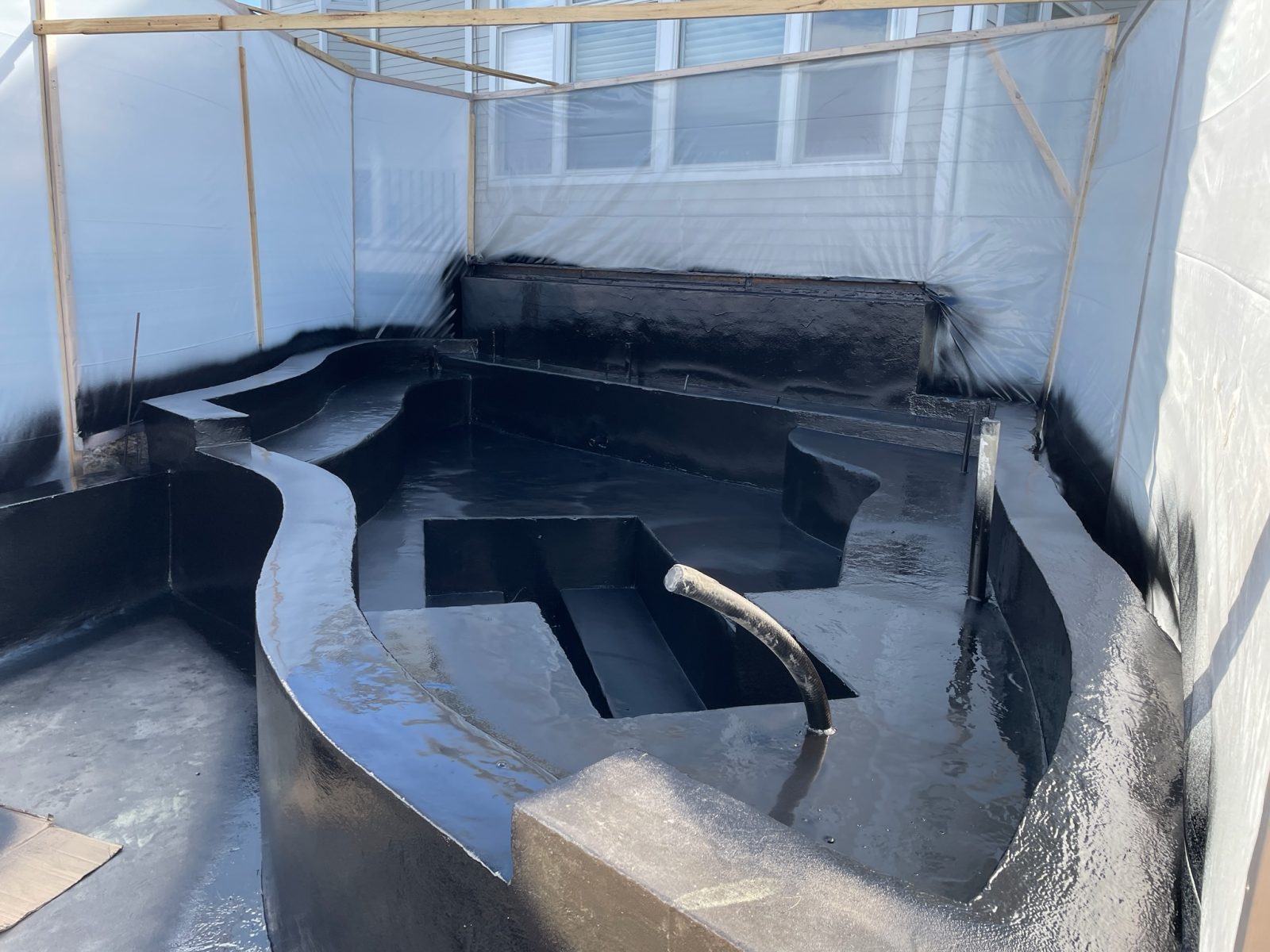
Pond & Lagoon Liners
Traditional EPDM and HDPE pond liners require careful seaming, are puncture-prone, and can't adapt to irregular shoreline geometry. Spray polyurea creates a monolithic liner that conforms perfectly to any shape — irregular banks, rock outcroppings, inlet structures — with no seams to fail and no wrinkles to collect sediment. Suitable for decorative ponds, fire suppression reservoirs, and agricultural water retention.
- • Decorative ponds and water features
- • Agricultural water retention ponds
- • Wastewater lagoon liners
- • Fire suppression and irrigation reservoirs
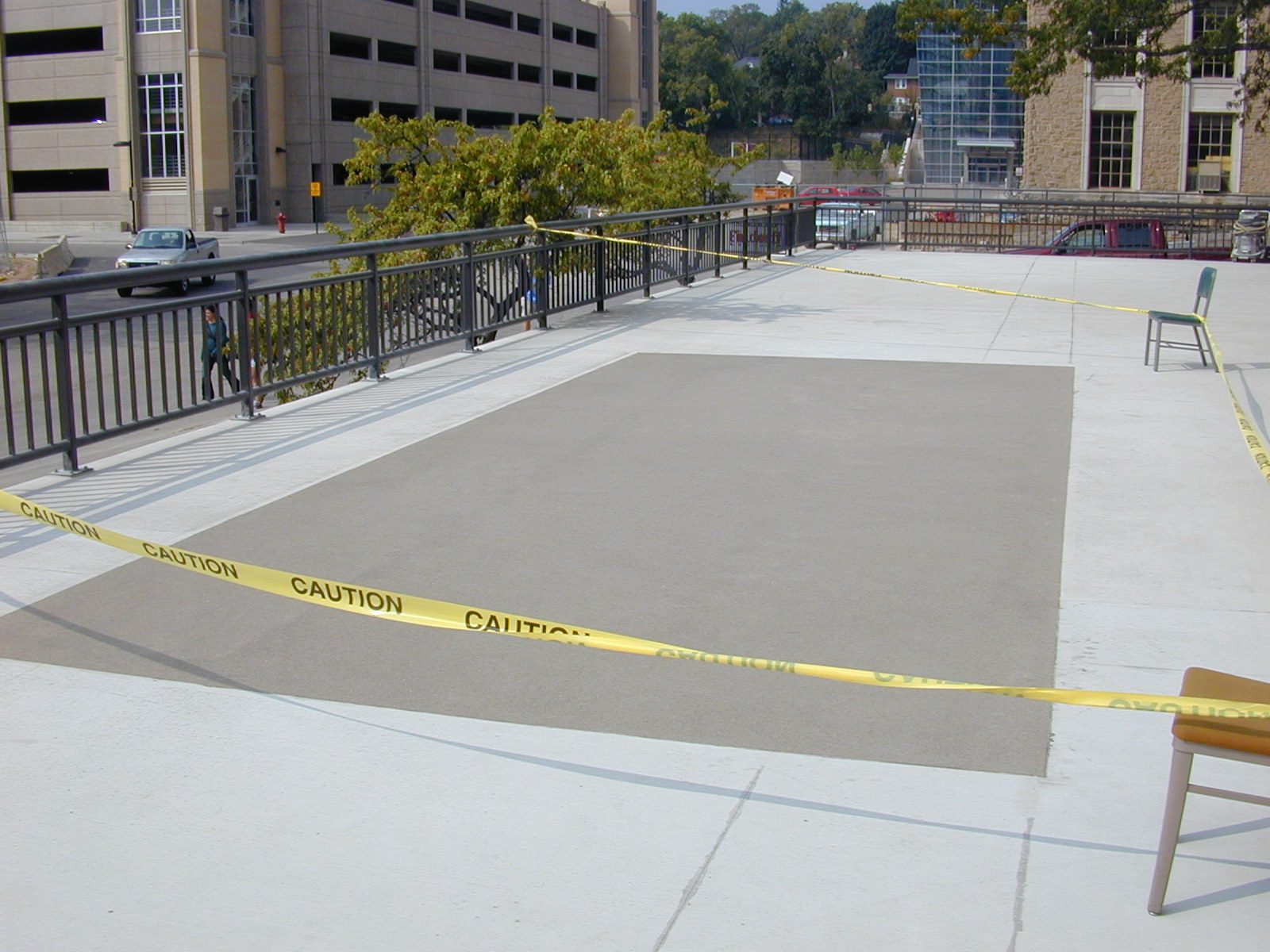
Plaza Decks & Parking Structures
Occupied space below a plaza deck demands a reliable, traffic-bearing waterproofing membrane. Polyurea systems resist tire traffic, ponded water, chloride-laden snowmelt, and freeze-thaw cycling while providing the elongation needed to bridge the expansion joints and crack propagation that are inevitable in concrete deck structures. Pedestrian and vehicular traffic grades available.
- • Above-grade parking deck membranes
- • Rooftop plaza traffic surfaces
- • Pedestrian walkways and ramps
- • Expansion joint bridging and crack isolation
Tunnels & Underground Structures
Underground structures face the highest hydrostatic pressure waterproofing challenges. Spray polyurea provides positive-side and negative-side waterproofing for tunnels, utility vaults, underground parking structures, and water/wastewater infrastructure. The fast cure cycle is especially valuable in confined-space applications where extended ventilation windows add project cost.
- Utility tunnels and conduit troughs
- Underground parking structures
- Water and wastewater pipeline rehabilitation
- Precast concrete vault linings
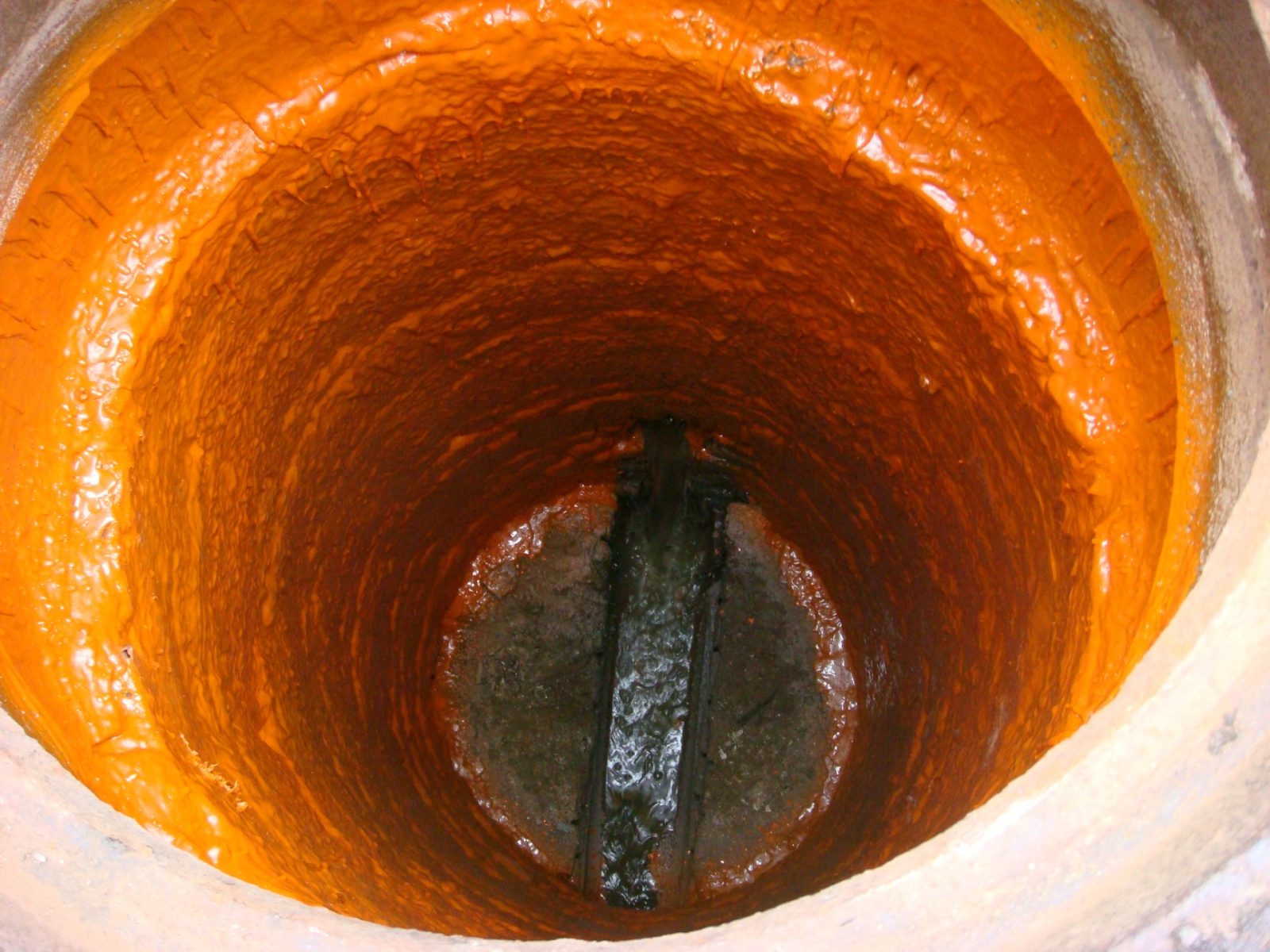
ORFC Waterproofing Products
The Right System for Every Waterproofing Application
Oak Ridge formulates and supplies all three core components of a complete spray waterproofing system — base coatings, foam substrates, and specialty primers. Every product is backed by full SDS/TDS documentation and direct technical support.
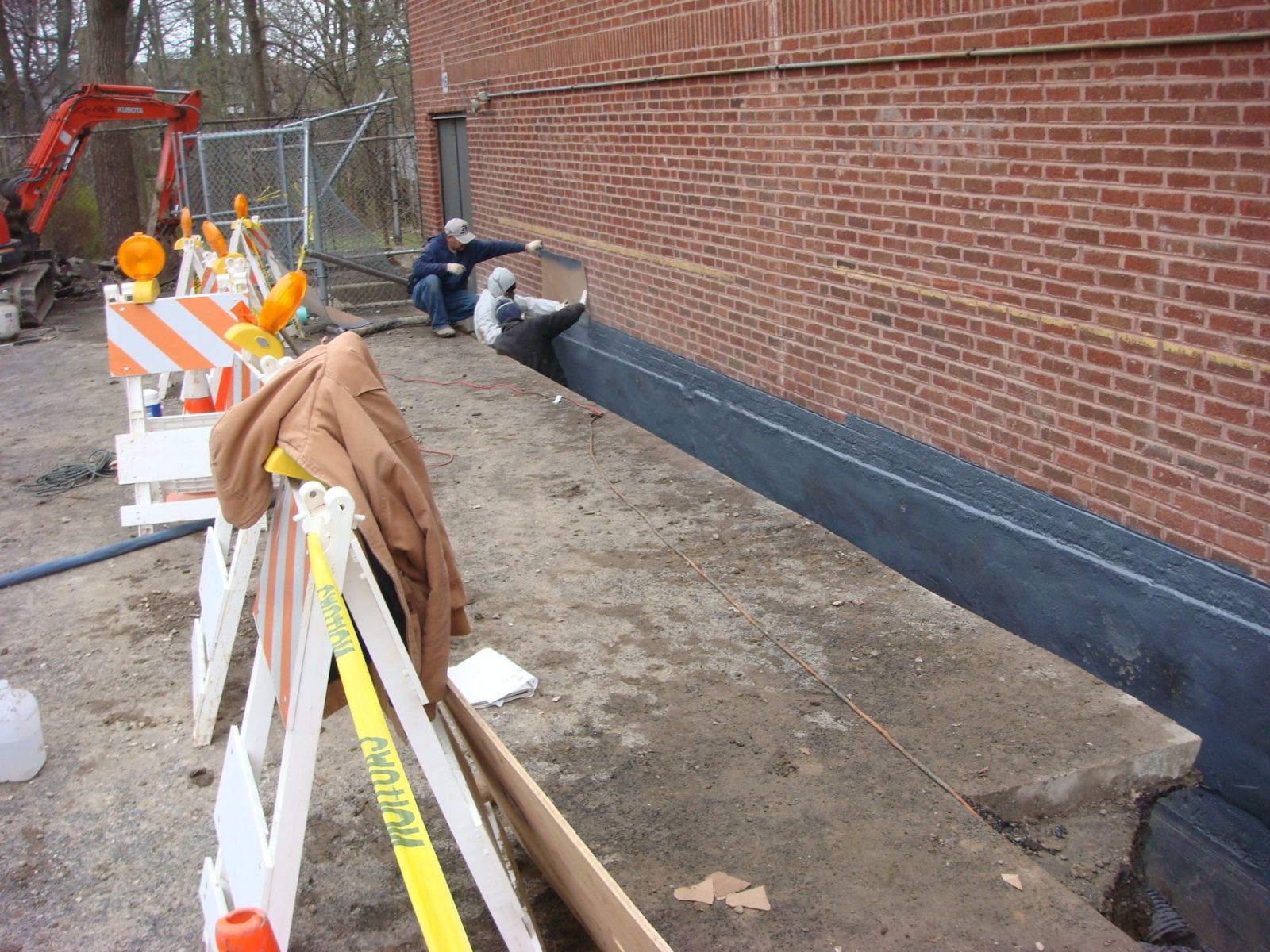
BadgerBlack is Oak Ridge's premier spray polyurea waterproofing coating — 100% solids, zero VOC, fast-curing, and engineered specifically for demanding waterproofing applications. Applied at high temperature and pressure, it cures tack-free in seconds to form a continuous, flexible membrane that bonds tenaciously to concrete, masonry, metal, and foam substrates.
- • Basement and below-grade foundation walls
- • Bridges and civil infrastructure
- • Secondary containment linings
- • Seamless, no lap joints or seams
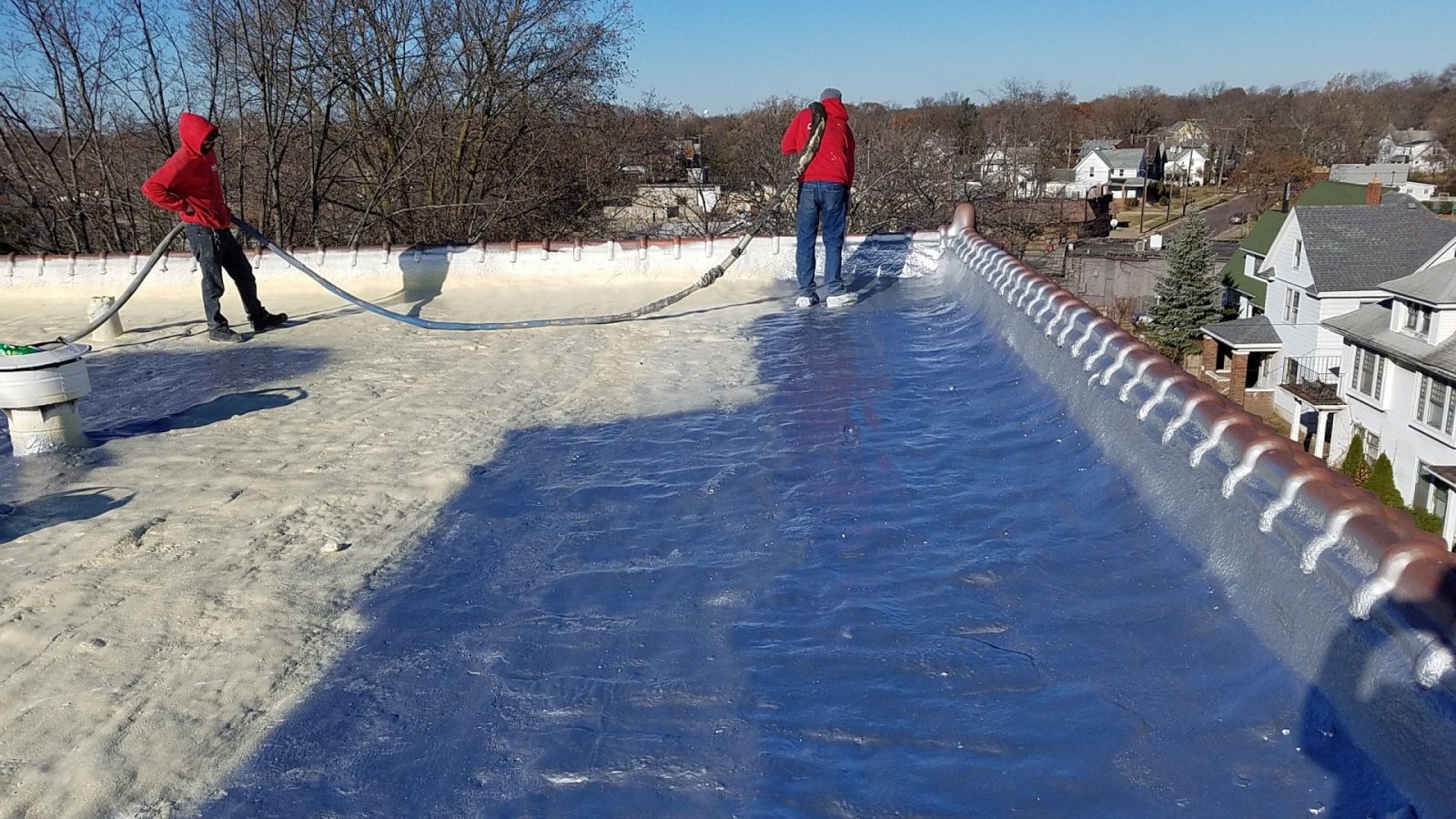
Oak Ridge's spray polyurethane foam roofing system pairs closed-cell SPF with a polyurea or elastomeric topcoat to create a seamless, monolithic roofing assembly. The foam provides both insulation and a sloped substrate for drainage; the polyurea topcoat seals against UV degradation, ponded water, hail, and foot traffic. Self-flashing around all penetrations eliminates the most common failure point in conventional roofing systems.
- • Renewable with a maintenance recoat — no tear-off
- • Adds insulation while waterproofing
- • Cool-roof white reflective topcoats available
- • Compatible with WatchGuard roofing program
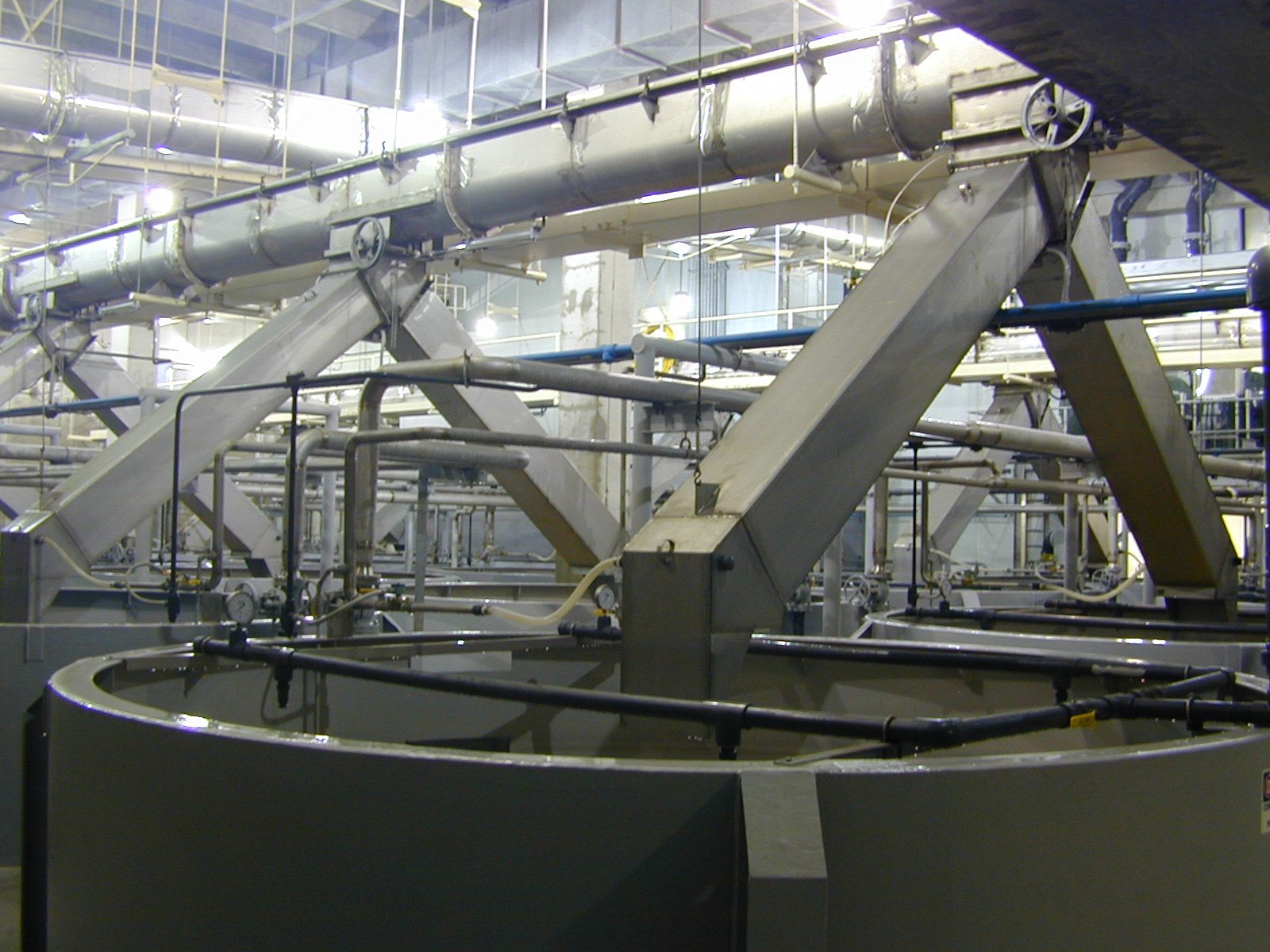
Beyond BadgerBlack, Oak Ridge manufactures a full range of polyurea formulations matched to specific substrates and exposure environments. Aromatic grades for below-grade and UV-protected applications, aliphatic grades for exposed rooftop and traffic-bearing surfaces, and fire-rated variants for applications requiring ASTM E84 Class A compliance. Our technical team matches the right system to your project conditions.
Technical Specifications
Why Polyurea Outperforms Every Other Waterproofing System
These aren't marketing claims — they're measurable physical properties that translate directly to better waterproofing performance and longer service life.
Every square inch of surface is continuous, homogeneous film. No joints, laps, seams, or adhesive bonds — which is where 90% of waterproofing failures originate. Spray polyurea eliminates these failure points entirely by forming one uninterrupted membrane from edge to edge.
Polyurea gel time is typically 3–8 seconds at the gun. Surfaces return to foot traffic within minutes. For bridge deck applications, maintenance coats, or projects with tight access windows, same-day return to service is often achievable — something no solvent-based or urethane system can match.
At 300%+ elongation, polyurea bridges hairline cracks and accommodates substrate movement — thermal expansion, settlement, vibration — without tearing or delaminating. A membrane that can stretch to three times its original length without failure is a membrane that stays watertight as your building moves.
Passes ASTM immersion testing for diesel fuel, gasoline, agricultural chemicals, weak acids, and salt solutions. This chemical resistance is intrinsic to the cured polymer — not a surface treatment that wears off — making polyurea the reliable choice for secondary containment and environments with incidental chemical contact.
Cured polyurea remains flexible at −40°F and resists deformation to over 300°F. This extraordinary service temperature range means the membrane performs reliably through Wisconsin winters, desert Southwest summers, and everything in between — without becoming brittle or flowing under heat stress.
Unlike moisture-cure urethanes or epoxy systems that require warm, dry substrate conditions, polyurea can be applied at substrate temperatures as low as 35°F and is insensitive to ambient humidity. This extends the waterproofing season significantly in northern climates and allows work on underground structures where damp conditions are the norm, not the exception.
How It Works
From Bare Substrate to Finished Waterproof System
A complete spray polyurea waterproofing installation follows a disciplined sequence. Here's what a professional crew executes on every project.
Surface Preparation
Concrete is pressure-washed, profiled by shot blasting or grinding, and allowed to dry. All cracks are routed, cleaned, and pre-treated. Substrate cleanliness is the #1 factor in long-term adhesion.
Primer Application
A moisture-tolerant epoxy or polyurethane primer is roller-applied to seal the substrate, improve adhesion, and prevent outgassing from porous concrete during polyurea spray. Critical for below-grade and saturated substrates.
Polyurea Spray Application
Two-component polyurea is proportioned at 1:1 by volume, heated to 140–160°F, and sprayed at 2,000+ psi. The A and B components mix at the gun tip and cure in seconds. Multiple passes build the specified dry film thickness — typically 60–120 mils for waterproofing.
Holiday Testing
The cured membrane is tested with a low-voltage holiday detector to locate any pinholes or thin spots. Any defects are spot-sprayed and re-tested. This step verifies the membrane is continuous and fully watertight before backfill or loading.
Topcoat or Drainage Layer
Depending on exposure, a UV-stable aliphatic topcoat protects aromatic polyurea from chalking. Below-grade applications receive a drainage layer and protection board before backfill. Roofing systems receive a reflective topcoat for energy performance.
Renewing an Existing System
SPF Roofing: No Tear-Off Required
One of the most compelling advantages of spray foam roofing specifically is renewability. When the original polyurea topcoat has weathered, a contractor simply cleans the surface, applies a maintenance primer coat where needed, and re-sprays the topcoat. The foam substrate remains in service indefinitely — with each maintenance coat essentially resetting the clock on a 15–20 year membrane life cycle.
Over a 40-year building life, this typically costs 40–60% less than two conventional roof replacements while adding R-value, never sending material to a landfill, and maintaining continuous occupancy.
Equipment
Professional Polyurea Equipment — From the Same Source as Your Coatings
Proper polyurea spray equipment is not optional — it is fundamental to membrane quality. Polyurea requires accurate 1:1 volumetric ratio, material temperatures in the 140–160°F range, and application pressures of 2,000 psi or higher. Without the right proportioner, you cannot achieve the fast, consistent cure that makes polyurea waterproofing work.
Oak Ridge is an authorized distributor of both Graco and PMC proportioning equipment — the two brands that dominate professional polyurea and spray foam applications. Unlike distributors who sell only materials, ORFC gives you a single source for coatings, equipment, spare parts, and on-site technical support.
Hydraulic models (H-30, H-XP3) deliver the high output and consistent ratio control required for professional polyurea waterproofing. Ideal for high-production roofing and containment projects where crew efficiency is critical.
PMC's heavy-duty hydraulic proportioner with programmable heating zones and electronic ratio monitoring. Popular with contractors doing high-volume polyurea waterproofing, bridge coatings, and containment lining work who demand the highest output and diagnostic capability.
ORFC builds complete turnkey spray rigs configured for waterproofing work — heated hose bundles up to 300', multiple gun drops, drum warming and transfer systems, and generator packages sized for your proportioner's electrical demands. Rigs arrive ready to spray on day one.
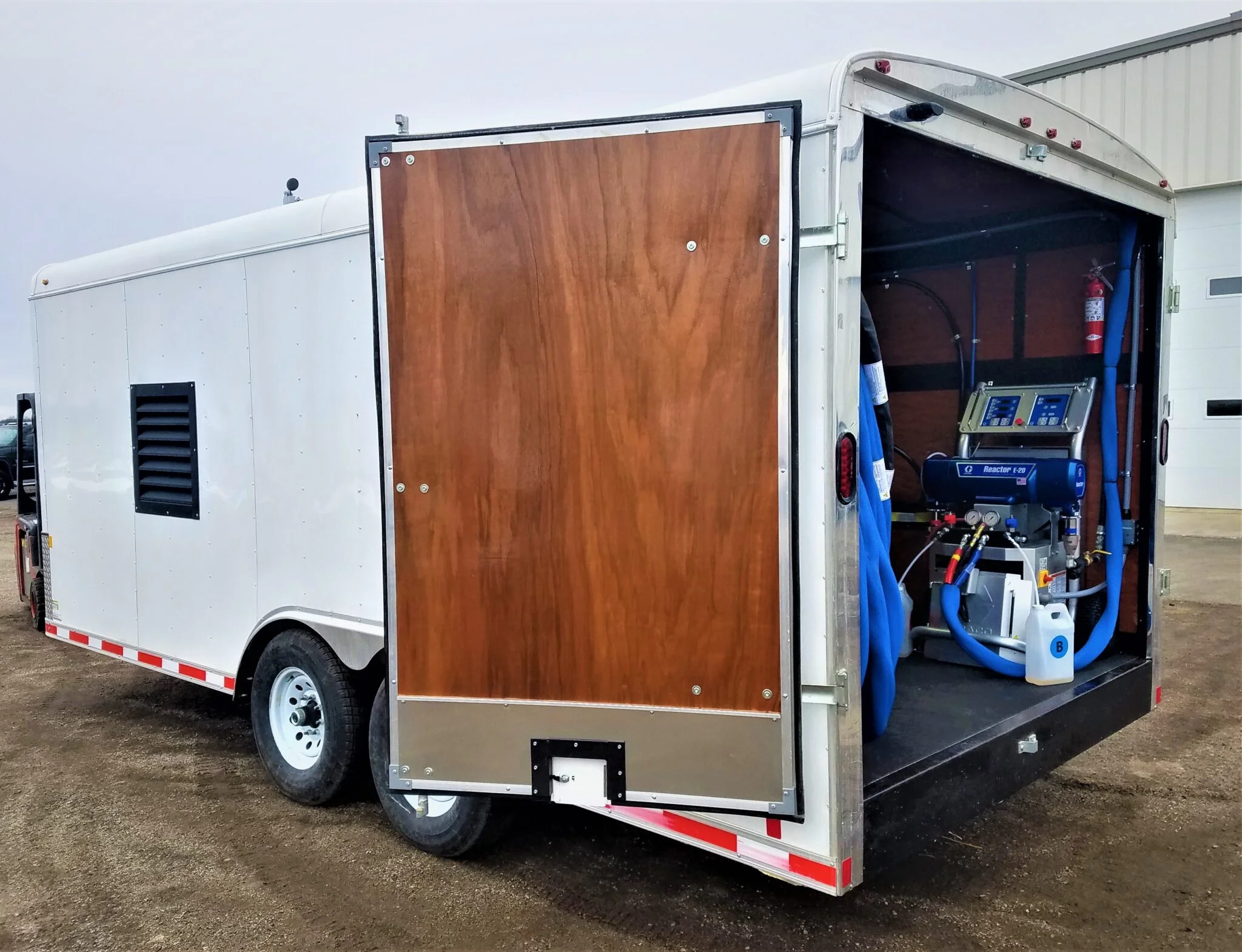
Oak Ridge supplies your coatings, your proportioner, your gun, your heated hose, and your rig — all from one distributor who understands how these components work together. When you have a job-site question, you're calling the people who made the material and specified the equipment.
System Comparison
Polyurea vs. Conventional Waterproofing Systems
How spray polyurea waterproofing stacks up against the most common alternative systems across the metrics that matter in the field.
| Property | Spray Polyurea | Sheet Membrane | Rubberized Asphalt | Crystalline / Cementitious |
|---|---|---|---|---|
| Seams / Joints | None (monolithic) | Many — most common failure point | Lap seams required | Joints at cold joints |
| Cure Time | Seconds (tack-free) | Install time only | Hours to days | 24–72 hours |
| Elongation | 300%+ | 10–20% (EPDM ~300% but seamed) | 50–150% | <2% (rigid) |
| Irregular Geometry | Excellent — spray conforms to any shape | Difficult — cuts and patches needed | Moderate | Good (trowel-applied) |
| Low-Temp Application | Down to 35°F substrate | Limited — adhesive issues below 40°F | Requires warm substrate | 40°F+ required |
| Return to Service | Same day | Same day (physical only) | 24–48 hours | 3–7 days |
| VOC Content | Zero | Low to none | Moderate to high | None |
Comparison reflects general system characteristics. Specific performance varies by product and application conditions. Contact ORFC for project-specific system recommendations.
Why Oak Ridge?
A Waterproofing Supplier Who's Also Your Technical Partner
Oak Ridge has been formulating and supplying spray foam and polyurea coating systems since 1984. We've seen every substrate condition, every climate challenge, and every equipment problem — and we know how to solve them.
We manufacture our own coating systems — we're not simply rebranding another manufacturer's product. That means we can adjust formulations for your specific substrate conditions, temperature range, or performance requirements, and you get direct access to the chemists who made it.
Buying your coatings and your proportioner from the same source eliminates the finger-pointing when something goes wrong on the job. ORFC troubleshoots the whole system — material, equipment, substrate, and technique — not just the part we sold you.
When you call 800-625-9577, you get a real person with real spray foam and polyurea experience. No hold queues, no tier-1 scripts. Our technical team has been in the field applying these products — they can diagnose your problem from a description.
Contractor insights & guides
How to Start a Roof Coating, Polyurea or Specialty Coatings Business
Every guide to breaking into this industry assumes you want to spray insulation. Here are six other trades a coatings business can be built on — what the work is, who buys it, what equipment each needs, and which three you can start without a plural-component rig.
Spray Foam Rig Options: Trailer, Gooseneck or Box Truck?
Your spray foam rig is the biggest investment in your business — and the right configuration determines how many jobs you can run, how fast you can grow, and how profitable each day is. This guide covers every rig type from portable skids to full production box trucks.
Spray Foam Insulation Spraying Techniques
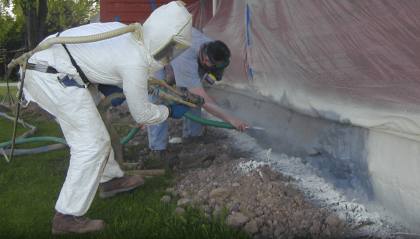
Proper spraying technique determines the quality of every spray foam job. This guide covers gun distance, pass speed, lift thickness, temperature management, and the most common application mistakes — whether you're new to the trade or training your crew.
Ready to Waterproof with Polyurea?
Get the coatings, the equipment,
and the support — from one call.
Whether you're spec'ing a basement waterproofing system, bidding a bridge deck membrane, or setting up a roofing contracting business from scratch — ORFC has the polyurea systems, the proportioning equipment, and 40+ years of field experience to get you to a watertight result.