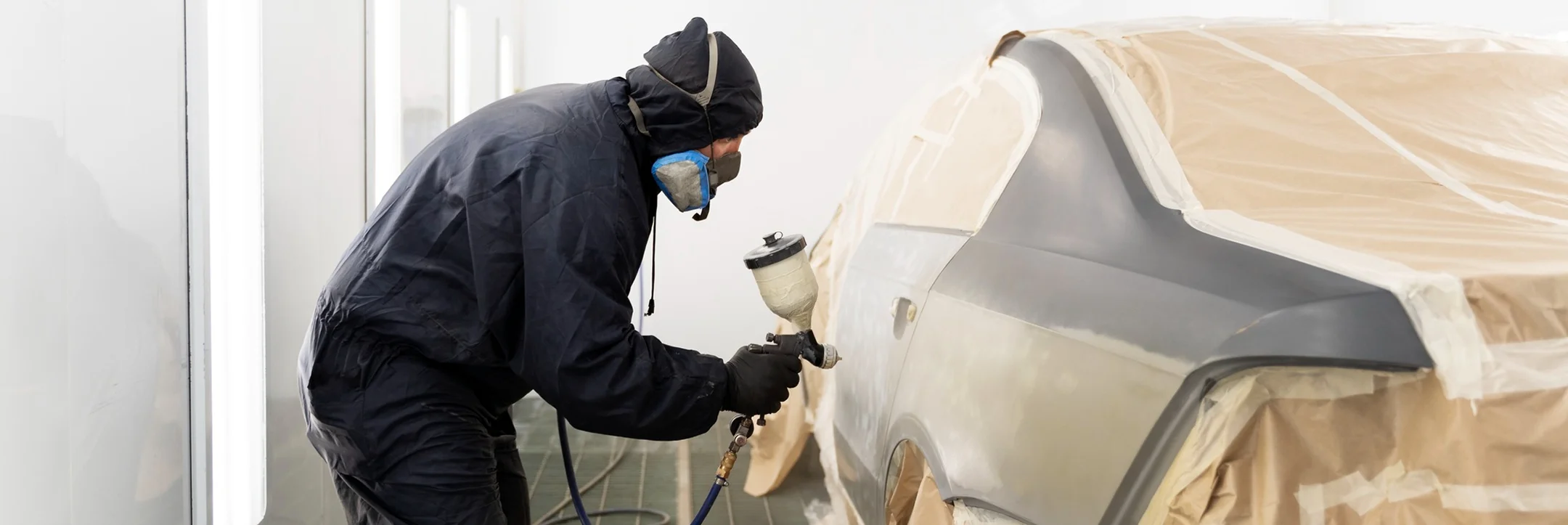
Concrete Repair Product
Concrete Mender
Polyurethane Crack Filler & Surface Repair
The critical first step in any floor coating system. Concrete Mender fills hairline cracks, spalls, and surface voids before primer and topcoat application — so your coatings bond right and stay that way.
Product Overview
The Repair Step That Makes Every Coating Last
Concrete Mender is a two-component, 100% solids polyurethane crack filler designed specifically for concrete surface preparation before floor coating application. Its low viscosity allows it to flow into and fill hairline cracks, shrinkage cracks, and surface voids that grinding or shot blasting cannot fix — creating a uniform, sound substrate that coatings can actually bond to.
Unrepaired cracks are the leading cause of floor coating delamination and early failure. Concrete Mender eliminates this failure point in 30–60 minutes, letting you move directly into primer and topcoat the same day.
Pairs directly with the OR-E41 epoxy primer and the Oak Ridge polyurea floor coating system for a complete, same-day floor system installation.
Low-viscosity formula flows into cracks as fine as 0.01 inches, filling completely from the bottom up.
Walk on repairs in 30–60 minutes. Topcoat the same day. No multi-day delays waiting for repairs to cure.
No solvents to off-gas. Safe for occupied facilities including food service, garages, and commercial buildings.
Cures to a hard, load-bearing solid that grinds flush with the surrounding concrete. No flex or bounce in repaired areas.
Bonds aggressively to concrete, including prepared surfaces that have been diamond ground or shot blasted.
Tested and specified with OR-E41 primer and polyurea topcoats as part of the complete Oak Ridge floor system.
Concrete Mender
Two-Component Polyurethane Crack Filler
Part of the Oak Ridge floor system: Concrete Mender is recommended as Phase 1 of the complete Oak Ridge floor coating system, used before the OR-E41 epoxy primer. Skipping the repair step is the most common reason floor coatings delaminate. See the full system overview.
Applications
Where Concrete Mender Gets Used
Any interior concrete floor that needs a coating deserves proper crack repair first. Concrete Mender is specified wherever surface integrity matters.
Garage concrete develops shrinkage cracks and control joint damage over time. Concrete Mender fills these before polyurea or epoxy floor coatings are applied, preventing liquid intrusion and topcoat bridging failure.
Heavy equipment and forklift traffic creates joint deterioration and impact spalls in warehouse floors. Concrete Mender rebuilds these areas before applying industrial floor coatings, maintaining a level, continuous surface safe for traffic.
Cracks in food-service floors are health code violations — bacteria and grease collect in unrepaired voids. Concrete Mender creates a seamless base before NSF-compliant coatings are applied. Zero-VOC formula is safe for use in occupied or partially open food facilities.
Industrial floors see chemical spills, point loads, and constant abrasion. Proper concrete repair before coating protects against chemical infiltration through cracks that can undermine adhesion over time. Concrete Mender handles the prep so the coating system performs as designed.
Showroom and service bay concrete repaired with Concrete Mender presents a professional, crack-free surface before decorative flake or solid-color polyurea is applied. Oil and fluid infiltration through unrepaired cracks causes staining and premature coating failure.
Before applying a skim coat or self-leveling overlay, existing cracks must be stabilized. Concrete Mender fills and bridges active and dormant cracks, preventing them from reflecting through thin overlays. Essential preparation step for polyurethane and polyurea overlay systems.
Technical Data
Concrete Mender — Technical Specifications
Typical values at 77°F (25°C) and 50% relative humidity. Performance varies with temperature and substrate conditions. Contact Oak Ridge for application-specific guidance.
| Property | Typical Value |
|---|---|
| Chemistry | Two-component aromatic polyurethane |
| Solids Content | 100% (no solvents) |
| VOC Content | 0 g/L |
| Mix Ratio (by volume) | 1A : 1B |
| Viscosity (mixed) | Low — 400–600 cps at 77°F |
| Pot Life | 8–12 minutes at 77°F |
| Gel Time | 15–20 minutes |
| Tack-Free Time | 20–30 minutes |
| Topcoat Window | 30–60 minutes (surface hard) |
| Full Cure | 24 hours (load-bearing) |
| Shore D Hardness (cured) | 70–75 |
| Compressive Strength | > 6,000 psi |
| Tensile Strength | > 2,500 psi |
| Application Temperature | 50°F–90°F (substrate and ambient) |
| Substrate | Interior concrete (prepared, dry or slightly damp) |
| Color (mixed) | Amber/tan |
| Coverage | Varies by crack width and depth — contact Oak Ridge |
| Packaging | Available in trial kits and production quantities |
Values are typical and do not constitute a specification. Product Data Sheet (TDS) and Safety Data Sheet (SDS) available upon request. Contact Oak Ridge at 800-625-9577.
Application Guide
How to Apply Concrete Mender
Concrete Mender installs quickly as part of the standard Oak Ridge floor preparation sequence. Follow these steps for best results.
Diamond grind or shot blast the entire floor to CSP 2–3 profile. Remove all laitance, contaminants, previous coatings, and loose material. Blow out cracks with compressed air to remove dust and debris. Concrete must be structurally sound — Concrete Mender fills cosmetic defects, not structural movement joints.
Combine equal volumes of Part A and Part B (1:1 by volume). Mix thoroughly for 60 seconds using a mixing paddle or by shaking a pre-measured kit. Do not alter the mix ratio. Material temperature should be 60°F–80°F for optimal viscosity and pot life. Cold material thickens and extends cure time.
Pour mixed Concrete Mender directly over cracks and damaged areas. Use a rubber squeegee or stiff-bristle broom to work the material into cracks, ensuring complete penetration. For wide cracks or spalls, pour directly into the void and use a putty knife to pack the repair. Work in small sections to stay within the pot life window.
Before gelation begins (typically 15–20 minutes), squeegee off excess material from the surface, leaving only what has filled the cracks and voids. Surface should be nearly flush with surrounding concrete. Any material left on the slab surface will cure as a bump — remove it before gelation.
Allow Concrete Mender to cure to a hard, non-tacky surface (30–60 minutes at 77°F). If any material has cured proud of the slab surface, grind flush with a floor grinder before applying primer. Cured material grinds easily and will not damage grinding equipment.
With cracks repaired and the floor prepared, apply OR-E41 epoxy primer to the entire surface. After the primer cures, apply the polyurea basecoat and topcoat per the Oak Ridge floor system specification. The result is a continuous, seamless, chemical-resistant floor with a proper concrete substrate foundation.
Safety: Wear chemical-resistant gloves and safety glasses during mixing and application. Ensure adequate ventilation. Do not apply at substrate temperatures below 50°F or above 90°F. Keep off wet or contaminated surfaces. Read the complete SDS before use. Full SDS available at oakridgepoly.com/resources or by calling 800-625-9577.
System Integration
Concrete Mender in the Oak Ridge Floor System
Concrete Mender is Phase 1 of the complete Oak Ridge floor coating system. Each phase is engineered to work with the next.
Fill cracks, spalls, and holes. Create a uniform, sound substrate. Topcoat-ready in 30–60 minutes.
Penetrating epoxy primer seals the concrete, mitigates moisture vapor, and creates the bond layer for polyurea topcoats.
Fast-cure 100% solids polyurea builds film thickness and chemical resistance. Optional decorative flake broadcast at this stage.
Aliphatic polyurea or acrylic topcoat provides UV stability, final chemical resistance, and surface texture for traffic.
Related Products
Complete the Floor System
Get Pricing & Documentation
Request Concrete Mender
Pricing & Data Sheet
Fill out the form and we will send you the Technical Data Sheet (TDS), Safety Data Sheet (SDS), and current pricing. For project-specific guidance, our technical team is available by phone.