How to Start a Roof Coating, Polyurea or Specialty Coatings Business
Almost everything written about breaking into this industry assumes you want to spray insulation. Search "how to start a spray foam business" and you will find plenty — including our own guide and a fairly blunt breakdown of what it costs.
But spray foam insulation is only one of the trades a plural-component rig will earn money at, and for a lot of people starting out it is not the best first move. Roof coatings, polyurea containment, floor coatings, RV roofs, bed liners and rust proofing are all real businesses with real customers — some of them with a far lower barrier to entry than foam.
This guide walks through six of them. For each one: what the work actually is, who pays for it, what equipment it needs, where that equipment overlaps with a foam rig, what we supply, how hard it really is to get started, and how people break in.
First, the thing that ties them all together
Most of these trades are sprayed with the same machine. A heated plural-component proportioner — a Graco Reactor, a PMC unit — with a heated hose, transfer pumps, a compressor and a generator will run closed-cell foam, fast-set polyurea, roof membrane, traffic-bearing deck coating and two-component bed liner. Different chemistry, different gun chamber, different technique, same core rig.
That matters for two reasons. First, if you already own a foam rig, adding one of these trades is mostly a new material and a new customer list rather than a new capital outlay. Second, if you do not own one yet, the rig you buy should be specced for where you intend to be in three years, not for the first job you land. Our guide to rig options covers pull-behind versus gooseneck versus box truck and every component that goes inside one.
The important exception: three of the six trades below can be started without a plural rig at all. If capital is what is stopping you, start there.
1. Roof coatings and roof restoration
What the work is
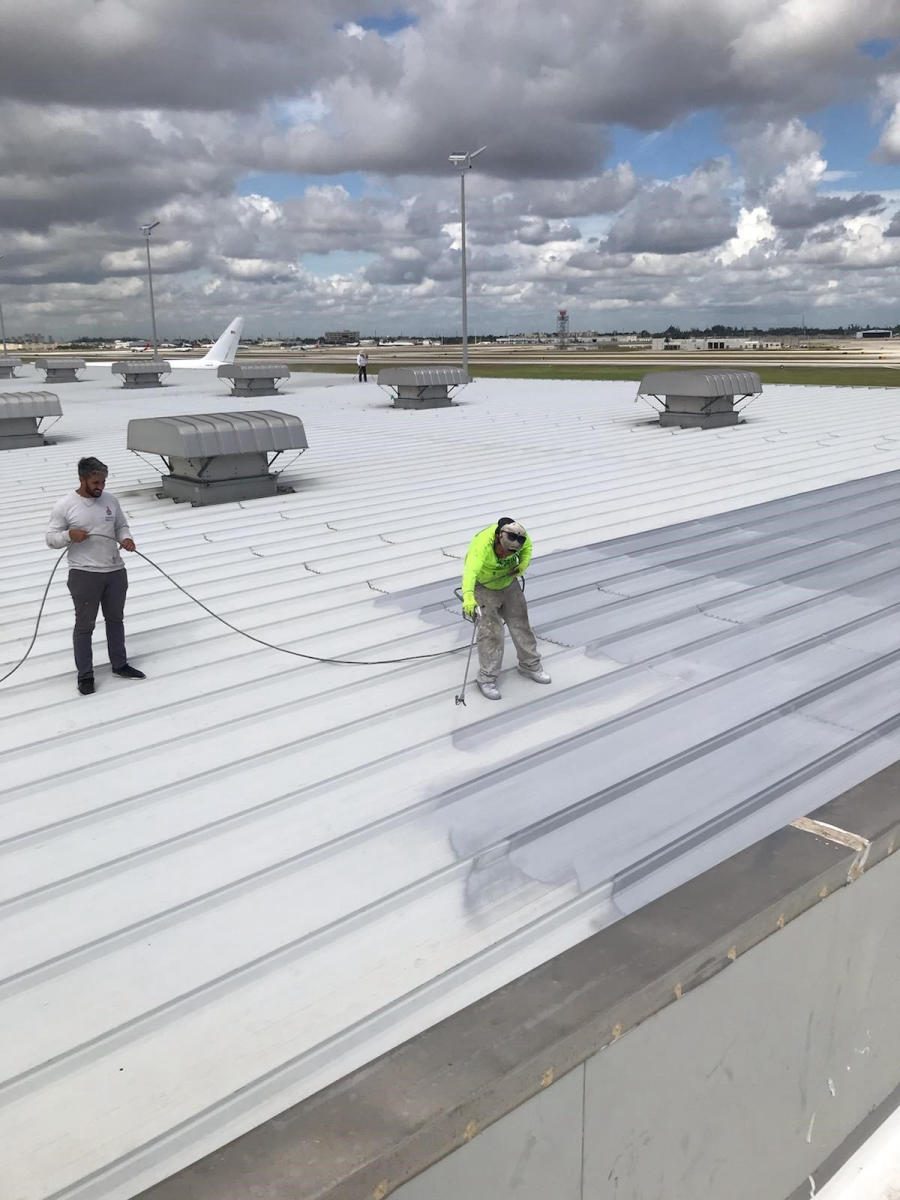
Two related things. SPF roofing is spraying polyurethane foam over an existing roof deck and protecting it with a topcoat — you are selling insulation and waterproofing in a single application, and the finished roof is seamless and self-flashing. Roof restoration is coating an aging metal, single-ply, built-up or previously-foamed roof with silicone, acrylic or polyurea instead of tearing it off.
Who the customers are
Commercial and industrial building owners, property managers, facility maintenance departments, schools, warehouses, and agricultural buildings. The pitch is straightforward: a restoration coating costs a fraction of a tear-off, does not fill a dumpster with the old roof, and does not shut the building down while it happens. You are competing against a roof replacement quote, not against another coating contractor.
What equipment it needs
This is where roof work gets interesting for someone with limited capital. Silicone and acrylic restoration coatings are single-component and go on with a high-pressure airless sprayer — no proportioner, no heated hose. Because of the viscosity you need a machine producing at least 3,500 PSI at the spray head, and a 5,000 PSI class pump with a reverse-a-clean tip is the sensible choice. That is a materially cheaper entry point than a foam rig.
Foam roofing and polyurea roof membranes are a different story — those need the full heated plural rig. Either way, budget properly for safety: fall protection, roof access, and a real plan for wind and dew point.
What Oak Ridge supplies
- OR 80SLM Silver Lining Membrane — a 100% solids pure polyurea roof membrane, tested at Miami-Dade airport for wind uplift, validated to ASTM D6083, and rated UL 2218 Class 4 for hail impact. 2,850 PSI tensile, 400% elongation, tack free in 10–20 seconds.
- OR 74LS and OR 93HS silicone — moisture-cure silicone roof coatings that resist ponding water and cure in 1–4 hours. OR 93HS is the high solids, low VOC version for occupied buildings.
- ORACR42 acrylic — the economical maintenance and recoat option over polyurethane roof foam and aged acrylics, with a bright reflective white finish.
- OR 7001 primer — single-component polyurethane primer with high adhesion to rolled roofing, concrete, wood and steel, and a tie coat for coating over an existing coating.
The realistic barrier
Low on equipment if you start with silicone restoration; higher on liability. You are working at height on someone else's building, weather windows govern your schedule, and a coating applied over a wet or dirty substrate will fail in a way that everyone can see. Insurance and fall protection are non-negotiable.
How people break in
Almost always through metal roofs. There are a lot of them, they are simple to walk, the failure mode (rust and seam leaks) is obvious to the owner, and the job is easy to price per square foot. Do a handful of small metal buildings well, photograph everything, and use them to get in front of larger facilities. Our comparison of polyurea versus silicone versus acrylic will help you pick the right system for a given roof — and explain the choice to the customer.
2. Polyurea and industrial containment
What the work is
The heavy end of the trade. Secondary containment berms and dikes, chemical and fuel storage tanks, manure pits and lagoon liners, pipe and pipeline exteriors, mining and process equipment, and industrial floors that take abuse no coating should survive. Fast-set polyurea gels in seconds, builds thickness on vertical surfaces without sagging, and returns the asset to service in hours rather than days — which is the whole reason plants pay for it.
Who the customers are
Manufacturing plants, chemical and fuel distributors, municipalities and water treatment, farm co-ops, mining operations, and the general contractors who serve them. Fewer jobs than any other trade on this list, much larger tickets, and buyers who work from written specifications and will hold you to them.
What equipment it needs
A heated plural-component rig, processed at roughly 160°F block and hose temperature at 2,200+ PSI on a 1:1 ratio. That is the same machine as a closed-cell foam rig, which is exactly why foam contractors expand into containment work — the capital is already spent.
What is not shared with foam work is surface preparation. Containment jobs mean abrasive blasting or aggressive mechanical profiling, blast media containment, dew point monitoring, and confined-space procedures. Budget for prep equipment as seriously as you budget for the sprayer. Substrate preparation for polyurea covers what "properly prepared" actually means.
What Oak Ridge supplies
- OR93BL — a high-build 100% solids membrane at 5,630 PSI tensile with 140% elongation and lasting crack-bridging. Gels in 6–8 seconds, applies down to 32°F rising, light traffic in 2 hours.
- OR 42D — aliphatic, color-stable polyurea for anything UV-exposed where the color has to hold.
- OR 811 and OR E41 primers for porous concrete and masonry.
The realistic barrier
The highest of the six. Fast-set chemistry is unforgiving — you cannot brush out a mistake — and the paperwork matters. Plants want to see SDS and TDS documents, application records and often a mock-up before they hand you a containment area. Expect to serve an apprenticeship on smaller jobs first.
How people break in
Usually as a subcontractor to someone already doing this work, or by starting with agricultural containment — manure pits, feed and fertilizer handling — where the specification pressure is lower and the relationships are local. Read primary and secondary containment for how existing applicators have grown into it.
3. Floor coatings
What the work is
Residential garage and basement floors, commercial shop and warehouse floors, parking structures, walkways, balconies and mechanical rooms. Epoxy and polyaspartic systems for decorative and light-industrial work; traffic-bearing polyurea membranes with an aggregate broadcast wear course where vehicles, freeze/thaw and de-icing salts are involved.
Who the customers are
Homeowners, property managers, small commercial and light industrial facilities, car dealerships, municipalities with parking decks. Residential garage work is the easiest first sale in this entire article — the customer can see the result, the job takes a day or two, and the price is within a household's discretionary spend.
What equipment it needs
The least spray equipment and the most floor equipment. Concrete grinders, shot blasters, dust extraction, mixing gear, squeegees and spiked rollers. A large share of garage and warehouse work is applied by squeegee and roller with no sprayer at all. Traffic-bearing polyurea decks and fast-set floor membranes do need the plural rig — that is where the overlap with a foam kit shows up.
What Oak Ridge supplies
- OR E41 — two-component water-based epoxy primer that also works as a standalone coating. Low odour, warm soapy water cleanup while wet, available in matte black, red, green, brown and light and dark gray.
- OR93BL — traffic-bearing polyurea membrane for parking structures, walkways, balconies and mechanical rooms.
- Concrete Mender 2.0 — low-viscosity polyurethane/polyurea repair resin for cracks, spalls and deteriorated joints. Simple 1A:1B mix, and mixed with sand it becomes a rapid-setting polymer mortar that is usable within the hour.
- OR 42D aliphatic color-stable polyurea for the topcoat.
The realistic barrier
Lowest equipment cost of the six, and the most competition because of it. The differentiator is preparation. Coatings do not fail because the coating was bad; they fail because the concrete was not profiled, was still holding moisture, or had a curing compound nobody tested for. Learn concrete before you learn coatings.
How people break in
Residential garages, sold locally and photographed obsessively. Once you have a portfolio, the same skills scale straight into warehouse and shop floors, which is where the square footage and the margin live.
4. RV and camper roof coatings
What the work is
RV and camper roofs fail at the seams, vents, skylights and terminations long before the rest of the unit is worn out. Cleaning the roof, priming it, sealing the details and coating the whole thing seamlessly is dramatically cheaper than a membrane replacement — and it is a job you can complete in a day.
Who the customers are
RV owners directly, but the money is in the trade: dealerships with units sitting on the lot, storage yards, campgrounds, RV service centers and mobile repair operators who would rather sub the coating out than learn it. The same customer base carries over to enclosed trailers, horse trailers and small boats.
What equipment it needs
The smallest footprint here. Cleaning and prep equipment, a sealant gun, and either an airless sprayer or the plural rig depending on which system you are applying. Several applicators run this trade out of a van. If you already have a rig for another trade, this is close to free to add.
What Oak Ridge supplies
- OR 7001 — single-component polyurethane primer and tie coat with high adhesion to rolled roofing and metal, penetrating porous substrates and locking down the surface. Substrate must stay above 40°F until cured, roughly 1–2 hours, and topcoat within the 2-hour recoat window.
- Alasta Seal — 100% solids, moisture-cured, paintable elastomeric sealant meeting ASTM C920 Type S, Grade NS, Class 35, for joints, penetrations, terminations and detail work. Gray as standard. Clean the substrate with isopropyl alcohol, not petroleum solvents.
- Roof coating over the top, matched to the substrate and the exposure.
The realistic barrier
Very low on equipment, very low on ticket value. Nobody gets rich on one camper roof. The business model is volume and turnaround, which means you need a source of units — a dealership or storage yard relationship — rather than a stream of one-off homeowners.
How people break in
Walk into the RV dealerships and storage yards within an hour's drive and ask what they currently do with a leaking roof. Most of them have no good answer and no in-house capability. Do one at cost to prove the finish, then price the rest properly.
5. Truck bed liners
What the work is
Spray-in bed liners for pickups, and the same chemistry on trailer decks, dump bodies, utility vehicle cargo areas, toolboxes and equipment. A sprayed liner bonds to the metal, so it does not trap grit and water underneath the way a drop-in tray does, and it does not wear through like a roll-on kit.
Who the customers are
Retail walk-in traffic keeps the bay busy, but the repeat volume is in fleets — municipalities, utility contractors, farm operations, landscapers, fire departments — and in trailer and dump body work where the surface area per job is far larger than a pickup bed.
What equipment it needs
This is the one that genuinely starts small. Flak Jacket 1 is a single-component, moisture-cured textured polyurethane. It cures by reacting with humidity in the air, needs no plural equipment at all, and covers roughly 80 sq ft per gallon. You need a bay, ventilation, masking discipline, solvent prep and Xylene for the final clean.
The two-component OR93BL polyurea system does need the heated plural rig — the same one that runs foam and containment work — and in return gives you color, a harder-wearing film and a liner built in a single visit.
What Oak Ridge supplies
- Flak Jacket 1 — single-component textured polyurethane, black only, scratch and fade resistant, no plural equipment required.
- OR93BL — two-component polyurea bed liner in 8 standard colors with custom color matching for fleets, applied with plural-component equipment.
The realistic barrier
The easiest of the six to start if you begin with the single-component product. Margins per pickup are modest and there are franchised competitors in most metros, so do not build a business plan on retail alone.
How people break in
Retail first to build technique and a portfolio, then chase fleet accounts and trailer work where a single customer is worth fifty pickups. If you already run a shop of any kind, this bolts on to what you have.
6. Rust proofing and metal protection
What the work is
Corrosion is a permanent line item for anyone who owns steel outdoors. Metal roofs, containment and storage tanks, grain and fertilizer handling equipment, hoppers, augers, conveyors, livestock trailers and agricultural machinery all degrade — frequently from the inside out, where nobody sees it until something fails. A high-build elastomeric membrane over properly prepared steel stops the process and buys years.
Who the customers are
Farms and co-ops, grain and fertilizer handlers, storage facilities, industrial plants, municipalities and equipment dealers. The comparison in their head is not "your price versus another coating" — it is "your price versus replacing this hopper", which is a much better conversation to be in.
What equipment it needs
The plural rig, plus serious surface preparation: abrasive blasting or aggressive mechanical profiling, media containment, and dew point monitoring so you are not coating over condensation. Complete overlap with foam and containment equipment on the spray side.
What Oak Ridge supplies
- OR93BL — two-component, 100% solids, zero VOC high-build polyurea membrane. 5,630 PSI tensile, 140% elongation, Shore D 50, gel in 6–8 seconds, tack free in 10–12 seconds, full service in 2 hours. It applies down to 32°F rising and 6°F above dew point, and stays elastic at low temperatures — which matters a great deal on ag equipment in the north.
- OR 811 primer where the substrate calls for it, and OR 42D aliphatic polyurea where the finish is UV exposed and the color has to stay put.
The realistic barrier
Prep is the entire job. A perfect coating over a poorly prepared surface fails, and on agricultural equipment it fails visibly and in front of the neighbors. Ag work is also seasonal — the window when a hopper or a harvester is available is narrow, so scheduling is a real constraint.
How people break in
One piece of equipment for one farmer who talks. Word of mouth in agriculture moves faster than any advertising you can buy — in both directions. Our agricultural coatings case study shows what that growth looks like in practice.
So which one should you start with?
Start with the customers you can already reach, not with the trade that sounds most interesting.
- You know builders and remodelers — spray foam insulation, then roof coatings.
- You know facility managers or farmers — roof restoration and rust proofing.
- You have a shop, a bay or retail foot traffic — bed liners and floor coatings.
- You have limited capital — silicone roof restoration, single-component bed liner, or epoxy garage floors. All three start without a plural-component rig.
- You already own a rig — polyurea containment and rust proofing are the highest-value additions, and the machine is already paid for.
The equipment follows the customer. That order is worth getting right, because the rig is the expensive decision and it is difficult to unwind.
What we can do, and what we cannot
Oak Ridge has manufactured and supplied this trade since 1984. We build custom rigs in-house, we are a Graco authorized distributor and stock PMC and IPM equipment, we manufacture the materials listed throughout this article, and we run one-day hands-on applicator training at our facility in Green Lake, Wisconsin — with on-site crew training available. We also carry certified pre-owned equipment when a new machine is not the right first purchase.
What we do not do: financing, franchises, business plans, websites, contractor licenses, or promises about what you will earn. There is no fee to work with us and no territory to buy. If someone in this industry offers you guaranteed income, be careful.
If you want to talk it through, the full picture is on our start your own coatings business page, and you can spec a machine with the rig builder or just tell us what you are trying to do. We would rather tell you the timing is wrong than sell you a rig you are not ready for.