Why Roof Coatings Fail — and Why Pure Polyurea Doesn't
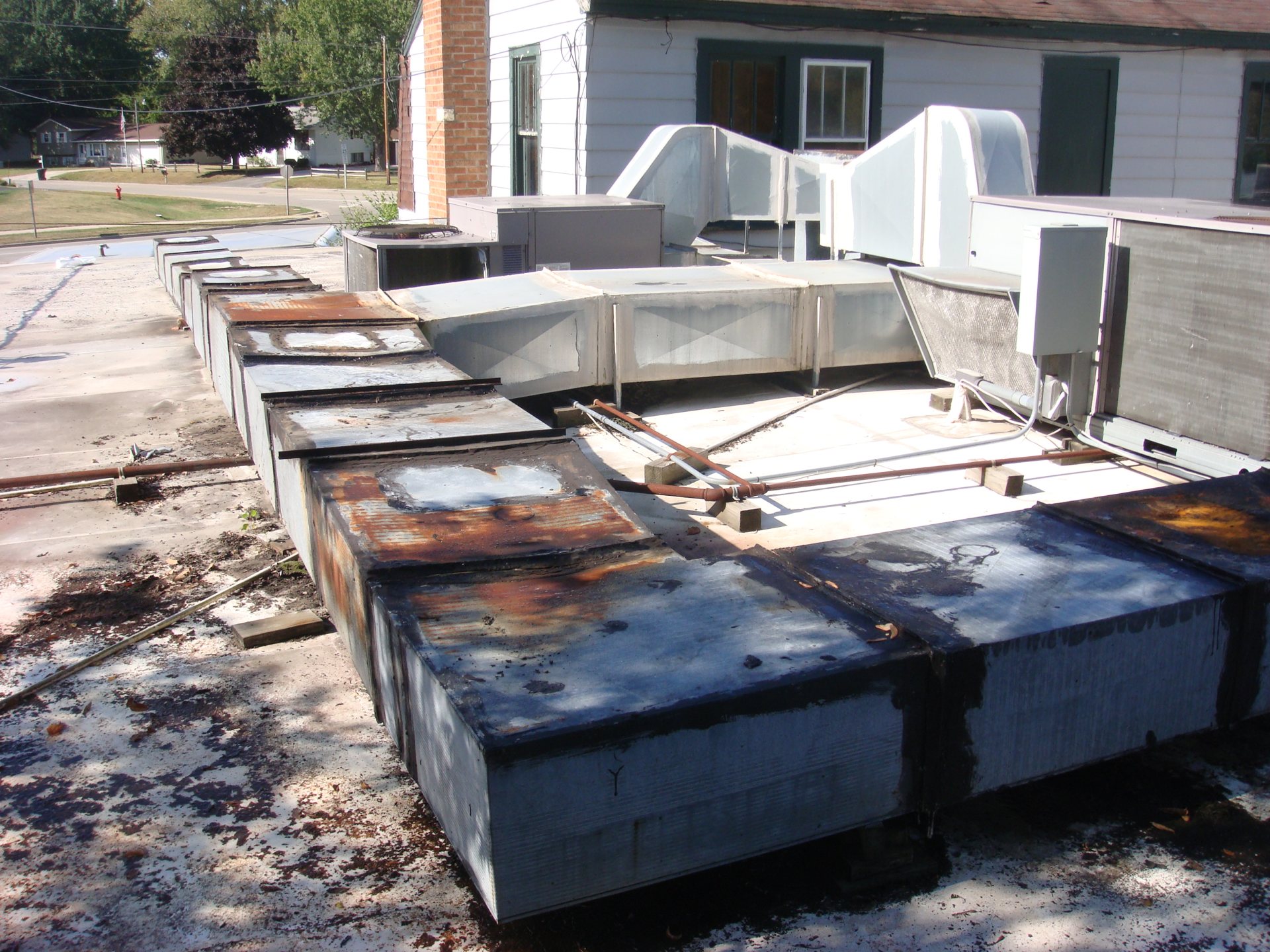
Nobody calls us when a roof coating is working. We hear about the ones that failed — the three-year-old acrylic that is peeling off in sheets, the silicone job that never quite cured in the low corner, the elastomeric that looked perfect for two summers and then cracked along every panel seam.
After forty years of supplying material to coating contractors, the pattern is boring. Roof coatings do not fail in a hundred creative ways. They fail in about six, over and over, and almost all of them trace back to two things: what the coating is made of, and whether it was ever actually stuck to the roof.
Here is the honest version — including the part where pure polyurea is not always the right answer. (If you want the straight side-by-side instead, we have a separate breakdown of polyurea vs. silicone vs. acrylic.)
The six ways roof coatings actually fail
1. Adhesion — the failure that gets blamed on everything else
This is the big one. When a coating comes off in sheets you can peel like wallpaper, the coating did not fail — the bond did. Usually because one of these was skipped:
- No primer, or the wrong primer. TPO and EPDM are engineered to shed things. Weathered metal carries oxide. Concrete carries laitance and moisture. Each needs a different tie coat, and "the coating is self-priming" is a claim that should always be tested on a small area first.
- Contamination left in place. Silicone residue from a previous restoration is the classic one — almost nothing bonds over it, including more silicone in some cases.
- Moisture in the substrate. Coat a wet or green slab and the vapour drive pushes the film off from underneath. Blisters appear months later and get blamed on the material.
We stock three primers precisely because there is no universal one: OR 7001 polyurethane for rolled roofing, metal and wood, OR 811 for concrete and masonry, and OR E41, a water-based epoxy, for green or damp slabs. A pull test on a test patch costs an afternoon. A delaminated roof costs the job.
2. Solids content — the coating you bought is not the coating you got
This one is arithmetic, and it surprises people.
A water-borne acrylic might be 50–60% solids by volume. A solvent-borne product can be lower. That carrier has to evaporate, and when it does, the film shrinks. Roll on 20 wet mils of a 50% solids coating and you are left with roughly 10 dry mils once it flashes off — and dry film thickness is what the warranty and the test data are based on.
Now apply that unevenly, as anyone rolling a coating over a granulated cap sheet must, and the high points end up thinner still. The roof did not get the specified system. It got a thin, patchy version of it, and it will fail first at the high spots.
Pure polyurea sidesteps the whole problem: at 100% solids there is nothing to evaporate. Wet mils equal dry mils. When OR-80SLM goes down at 40–80 mils, 40–80 mils is what stays on the roof.
3. Ponding water
Most flat roofs are not flat, and drainage that worked when the building was new rarely still works after two decades of deck deflection. Water sits.
Acrylics are the wrong chemistry for standing water — many will soften or re-emulsify given enough time submerged, which is why acrylic manufacturers exclude ponding areas from their warranties. Silicone genuinely handles ponding well; it is the honest strength of that chemistry. Polyurea is simply unaffected.
If ponding is the defining problem and there is no plural-component rig on the crew, a high-solids silicone like OR 93HS is a legitimately good answer, and we will sell it to you without a speech about polyurea.
4. Seams, laps, curbs and penetrations
Sheet membrane roofs almost never fail in the middle of the field. They fail at seams, fasteners, curbs, drains and pipe boots — the places where the material stops being a sheet and starts being a detail.
Roll-applied coatings inherit a softer version of the same problem. A roller cannot maintain film build up the side of a curb or around a cluster of conduit. Those are exactly the spots that leak.
A sprayed membrane is monolithic by construction: the same film thickness runs up the curb, around the drain and across the field with no lap, no fastener and no discontinuity. Where spray genuinely cannot reach, brush-grade material is the right tool rather than a compromise — OR 60BM is pure polyurea you apply by brush, and OR80JF handles control and expansion joints.
5. Movement and thermal cycling
A metal roof in the upper Midwest can swing well over a hundred degrees between a January night and a July afternoon, and every panel moves. A coating with poor elongation cracks along the panel ribs and seams — usually in year two or three, usually in a straight line that makes the cause obvious.
Elastomeric behaviour is not a marketing word here. It is the difference between a film that stretches with the deck and one that splits.
6. UV — and the part most polyurea marketing leaves out
Here is where we will be straight with you, because it matters for specification.
Aromatic polyurea chalks and fades in direct UV. It does not lose its waterproofing — the physical properties hold up — but the surface will dull and colour will drift. Anyone telling you their aromatic polyurea is colour-stable in full sun is overselling it.
The fix is chemistry, not optimism: an aliphatic topcoat. OR 42D is a 100% solids aliphatic polyurea that holds colour, and it goes over the aromatic build coat where appearance matters. On a commercial flat roof nobody sees, the aromatic system alone is usually the sensible economic call.
Why pure polyurea holds up
Polyurea is not "a better acrylic". It is a different reaction. An isocyanate meets a fast-reacting polyamine blend at high temperature and pressure, and crosslinks almost instantly. Practically, that buys four things:
- 100% solids, so no shrinkage. No carrier, no VOCs to off-gas, no gap between the thickness you sprayed and the thickness you keep.
- Gel in under five seconds. The membrane is rain-safe almost immediately and walk-able in minutes. That is a real weather-window advantage in a climate where an afternoon storm can ruin a day's work on a slow-curing coating.
- Elongation with recovery. It moves with the deck through thermal cycling instead of splitting.
- Genuinely seamless. Sprayed in place over every curb, drain and penetration with no laps or fasteners.
For OR-80SLM specifically, those properties are third-party validated rather than self-reported: Miami-Dade NOA approval for hurricane-zone construction, ASTM D6083 validation, and independent hail resistance testing. Miami-Dade is the toughest roofing code in the country, and the approval took years of testing to earn.
When polyurea is not the right call
We sell every one of these chemistries, which means we have no reason to push one where it does not belong. Straight answers:
- Sound roof, tight budget, dry climate, no ponding. A reflective acrylic like ORACR42 is a sensible maintenance coat. Polyurea would be over-specifying.
- Ponding is the main problem and there is no rig. Silicone — OR 93HS or OR 74LS.
- Small roof, no plural equipment, no crew. Alasta Seal is 100% solids polyurethane you can brush or spray with no proportioner at all. It is what we point RV, camper and trailer owners to.
- The roof is wet inside. No coating fixes saturated insulation. Tear-off, or foam over it after the wet material is gone — a coating over a wet assembly is money spent to hide a problem.
Polyurea earns its cost when the roof cannot fail, when there is real movement, when ponding and hurricane or hail exposure are in play, or when the downtime from a second failure would cost more than the material ever did.
Foam plus coating, when the roof needs slope
If the underlying problem is that the roof does not drain, no coating alone will fix it. Closed-cell spray polyurethane foam re-slopes the deck and adds roughly R-6.5 per inch of continuous, fastener-free insulation — and then it needs a top coat, which is where the line-up above comes back in.
Because Oak Ridge supplies the foam and the coating, both halves get specified together and ship together. When a compatibility question comes up mid-job, it is one phone call, not two vendors pointing at each other.
What we would actually tell you to do
- Test the bond before you buy the material. A primed test patch and a pull test tells you more than any data sheet.
- Specify dry film thickness, not gallons. Coverage rate is a sales number; DFT is what performs.
- Match the primer to the substrate, and treat "self-priming" as a claim to verify.
- Detail the curbs and drains first, while you still have patience for them.
- Be honest about ponding and movement when you pick the chemistry. Most failures are decided at specification, not on the roof.
Oak Ridge has been supplying spray foam and coating contractors since 1984 from Green Lake, Wisconsin, and we ship to all 48 continental states. Our team has installed these systems, not just sold them — so if you send us photos of a roof and tell us the budget, you will get a straight recommendation, including "that one does not need polyurea".
See the full roof coating line-up, browse all products, or send us your project specs. You can also call the technical team direct at 800-625-9577.